Hollywood does seem to like an end-of-the-world story right now. And based on the Box Office evidence of the last couple of months, the movie-going public is rather partial to an ensemble superhero action-fest too. So, with the arrival of X-Men: Apocalypse, we should find ourselves in the sweetest of modern cinematic sweet spots.
Believe it or not this is the ninth instalment in the X-Men series – only the likes of Harry Potter and Police Academy can compete with such prolificacy – and the third in a series of prequels exploring the origins of Marvel's academy of world-defending mutants. Following on from the superb First Class and Days of Future Past, Apocalypse again centres on James McAvoy (still slowly morphing into Patrick Stewart) and his 'school for the gifted', a place where those born with superhuman powers can hone their skills and find respite from a world that doesn't understand them.
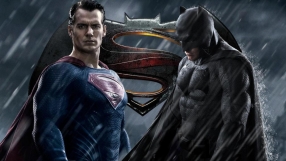
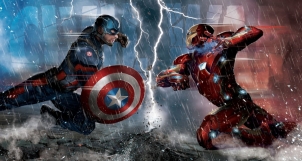
This time McAvoy's Professor Xavier and his young charges face – as is customary in an ever-escalating universe – their 'greatest foe ever' a God-like warrior named Apocalypse (Oscar Isaac) who has laid dormant since the age of ancient Egypt, and who has now decided to destroy the modern world in order to rebuild it in his image. As a result there's even more shredding of cities than we usually see in such films, but unlike the recent Batman vs Superman and Civil War movies, this mass carnage is glossed over, like some sort of nuclear-weapon-enabled episode of Tom and Jerry.
It's extraordinary to say, given the enormous number of CGI artists involved, but these now familiar sequences of epic destruction are among the film's least interesting moments. In fact, Isaac's all-powerful bad guy is a tiny bit ridiculous at times, teleporting around with a randomly assembled gang of henchmen, and looking a bit too much like a member of the Blue Man Group to be taken really seriously. Much more fascinating is the continuing relationship between Xavier and Michael Fassbender's Magneto, the arch-nemeses who somehow still seem to remain quite good friends. They're hardly modelling good disagreement (Magneto kills a lot of people), but the question explored through their relationship – whether there's any light left in the darkest heart to allow for redemption – is a timeless and theological one. Magneto is the classic hymn's 'vilest offender', while it's Xavier who refuses to give up faith that he might one day choose to change.
This recurring 'prodigal friend' subplot is what keeps X-Men Apocalypse from unravelling. There are lots of high points: new character Quicksilver's introduction gives us one of the most inventive and crowd-pleasing scenes in superhero movie history; while the origin stories around some of the key X-Men are well-drawn and backed up by some fine performances (especially Sophie Turner as the messianic Jean Grey).
There's also lots of interesting 'spiritual' content. One of the key characters, influential in the film's final battle, is a deeply religious figure who's shown praying beforehand, while when the world is inevitably saved, the politicians credit the "Grace of God", and state that "our prayers were answered." And while it's made clear that Apocalypse isn't actually a God, the way he surrounds himself with four 'horsemen' sets up an interesting who-stole-from-whom conversation with the Bible.
While it doesn't fail however, X-Men: Apocalypse certainly wobbles a fair bit. It takes an awfully long time to reach its concluding clash, and there's a lot of assembling and then standing around in teams on both sides. At one point, the five bad guys simply seem to be posing around on rocks like the cast of a perfume advert. And while the 1980s setting mainly works, it's occasionally a bit too heavy-handed, with an on-the-nose reference to the original Star Wars trilogy and a moment where director Bryan Singer might as well be shouting "LOOK! KNIGHT RIDER'S ON THE TELLY" from behind the camera.
The film is also shockingly violent at one notable point, to the degree that the UK's 12A rating seems very generous indeed; I certainly wouldn't recommend showing it to children under that age. This single three-minute sequence of intense rage and blood splattering is out of keeping with the tone of the rest of the film (although the final sequence involving Apocalypse himself is probably another look-away moment for many).
Fans will be happy with X-Men: Apocalypse, and for the rest of us, the performances and themes are enough to keep everyone interested. Would you 'sell your soul' in return for great power; can an evil man be redeemed? The giant comic canvas allows us to safely explore the more mundane versions of these questions in our own lives. As ever, the themes and ideas behind the gargantuan battles of fantasy fiction are so much more interesting than the battles themselves.
Martin Saunders is a Contributing Editor for Christian Today and the Deputy CEO of Youthscape. You can follow him on Twitter: @martinsaunders