Dr Rowan Williams received two standing ovations from General Synod today in appreciation of his service to the Church and nation as Archbishop of Canterbury.
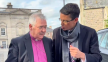
In a touching farewell speech, the second most senior figure in the Church of England, the Archbishop of York praised Dr Williams' intellect and his "tremendous courage" over the years.
"In the thick of recession and of conflicts near and far, we have come to rely on you for the voice of reason, faith and deeply rooted Christian hope," said Archbishop John Sentamu.
"You have not fought shy of conflict, but you have been courageous and outspoken, especially on matters of our humanity and justice."
Dr Sentamu said that although the role of Archbishop of Canterbury was symbolic it had been "very, very costly to you personally".
"Of course, like me, by a few you have been criticised for not being true-blood English," he said.
"I have appreciated the solidarity this has given us as missionary Archbishops in this land of hope and glory."
Dr Williams' decade in office has been a tumultuous one not only for the Church of England but for the worldwide Anglican Communion, of which the Archbishop of Canterbury is the spiritual figurehead.
The consecration of the openly gay Bishop Gene Robinson in 2003 triggered a row that continues today.
On Tuesday, Dr Williams suffered the personal blow of seeing legislation to allow women bishops - a cause he has championed - fall at the final hurdle.
Dr Sentamu praised the way in which his superior could "understand the views of those with whom you differ" and the "particularly generous form of gracious respect" he had shown them.
"We will miss that reckless grace and most of all in a cynical world we will miss your willingness to see the good in everyone, to attribute positive motives even to those who have opposed and maligned you," he said.
"That is a treasure of the kingdom in you that we all covet."
In his final address to Synod as the Archbishop of Canterbury, Dr Williams said he had been sustained through the years by the "sense of a sending God".
"A God who sends us to somewhere else and someone else to make that connection ... that connects them to God."
Reflecting on the Church in the wake of yesterday's shock vote, Dr Williams appealed to Synod member to rediscover their trust in each other and work together to connect the world to a "trustworthy God".
"Much of the sad and difficult stand-off we find ourselves in comes from a mutual lack of trust," he said.
The Archbishop said he hoped the conversation around trust would carry on after his departure at the end of the year as he appealed to Synod members to develop a trusting connection with one another.
"My prayer is that Synod will lift into that potential," he said.