
Dr Rowan Williams has opened up about the highs and lows of his 10 years at the helm of the Church of England and the worldwide Anglican Communion.
In three months, Dr Williams will leave office after a decade that has seen painful rows over homosexuality and women bishops within the Church, and sizeable shifts in a nation embracing new attitudes and struggling to come out of the worst double-dip recession in 50 years.
In a wideranging interview with The Telegraph, the Archbishop said he feels “massive anxiety” about the Government’s austerity programme and notes that it has “not yet delivered what everybody hoped”.
In an age of secularism and vocal atheism, it concerns him that two of the three main party leaders are atheists, while David Cameron admits his faith comes and goes.
“It does give me some concern,” he said. "That means we have, as people of faith, to encourage our own folk to be a bit more willing to go into politics, and get their hands dirty.”
The Church has been at odds with the Government recently over its plans to legalise gay marriage. Dr Williams told The Telegraph that the consultation had been “very inadequate” and overlooked the legal position of the Churches and marriage.
However, he said the Church had been wrong in not doing more to support the civic rights of gay people and its opposition to gay marriage had exposed the Church to accusations of homophobia.
“We’ve not exactly been on the forefront of pressing for civic equality for homosexual people, and we were wrong about that.”
On the question of whether legalising gay marriage would lead to the disestablishment of the Church, the Archbishop said: “We’ve been assured that there will be no pressure on the Church to perform marriages, but of course as things stand, every citizen has the right to be married in Church.
“That’s alright, so long as the State’s definition of marriage and the Church’s definition are the same. If the State’s definition shifts … then we have a tangle.”
Reflecting on the future of the office of Archbishop of Canterbury, Dr Williams told The Telegraph the Church was considering a “more presidential figure” to take the helm alongside the Archbishop of Canterbury.
If the Archbishop of Canterbury were no longer the head of the Anglican Communion, he remarks: “It would be a very different communion, because the history is just bound up with that place, that office.
“So there may be more of a sense of a primacy of honour, and less a sense that the Archbishop is expected to sort everything.”
The Secretary General of the Anglican Communion issued a clarification saying that The Telegraph's report of a 'presidential' figure had been "inaccurately stated".
Canon Kenneth Kearon said: "There are no such plans. The Archbishop of Canterbury simply said in the interview that he could see that in the future there might be some reflection on how the administrative load associated with the Anglican Communion might be better shared.
"The Anglican Communion has several decision-making bodies, one of which is meeting in a few months' time. Nothing like what this newspaper has suggested is on the agenda."
Following his departure, Dr Williams will take up his new post as Master of Magdalene College, Cambridge.
-

Enoch Burke accuses Archbishop of remaining 'silent' in school trans dispute
-

Churches challenged to make single Christians feel fully part of church life
-

Many churches lack AI policies despite widespread support among pastors, study finds
-

Half of Christian questions on ChatGPT are attempts to understand the Bible
News
-

Former Crowded House pastor and wife charged with rape
-

Enoch Burke accuses Archbishop of remaining 'silent' in school trans dispute
-

'Such a blessing' - church that closed down 15 years ago opens its doors again
-

Christians urged to speak out against 'conversion practices' bill
-

Half of Christian questions on ChatGPT are attempts to understand the Bible
-

Violence and persecution driving global Christian exodus, report warns
Most Popular
News

The dire American political situation: a brief overview for faithful Christians in Britain
Professor Robert AJ Gagnon argues that Christians have a moral duty to vote Republican, contending that Democratic policies pose a greater threat than Republican candidates’ failings.
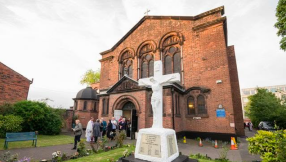
Police appeal for witnesses after head smashed off Jesus statue at church war memorial
Officers have released a CCTV image after a war memorial at St Alban’s Church in Warrington was vandalised and daubed with offensive graffiti.

Belief in ghosts and magic linked to faith and trust in science, study finds
A new study suggests that Americans who believe in God while placing strong trust in science and reason may be more likely to believe in ghosts, curses and other supernatural phenomena.

Archaeologists may have discovered identity of mystery skeleton in Westminster Abbey
Archaeologists believe they may have finally discovered the identity of a skeleton buried in a Roman sarcophagus in Westminster Abbey.





