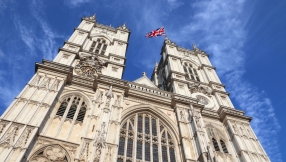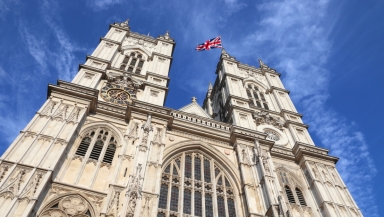
Archaeologists believe they may have finally discovered the identity of a skeleton buried in a Roman sarcophagus in Westminster Abbey.
The limestone sarcophagus was first discovered in 1820. However it was not officially excavated until 1869.
Although it was found in an area around the north of the nave, experts believe the sarcophagus was not originally buried there. According to Professor Warwick Rodwell, consultant archaeologist at Westminster Abbey, the original resting place was more likely to have been a wall recess in a mausoleum, the Guardian reports.
The sarcophagus itself appears to be a mix of time periods and cultures. Apparently created during the 4th century and bearing an inscription to one Valerius Amandinus, the sarcophagus also features a carved cross running across the full length and width of the lid in an Anglo-Saxon style.
Adding to the belief that the skeleton inside is not Valerius Amandinus, who was likely a wealthy Roman, is the fact that no Roman artifacts were found within the sarcophagus or in the area in which it was found.
Analysis of the skeleton suggested a male, five feet, nine inches tall, aged 35 to 49 and living in the late 10th or early 11th century – well after the period of Roman rule in Britain.
Researchers also found a rectangular outline in a white substance at the bottom of the sarcophagus. Rodwell, writing in the Journal of the British Archaeological Association, said this could be evidence that the body was covered in powdered lime before being interred in the sarcophagus.
Piecing these clues together, Rodwell said the skeleton was likely to be an abbot.
“Nobody of lower rank would have been buried in anything like that,” he told the Guardian. “The Latin cross again points to a major ecclesiastic.”
Rodwell has used his theory to narrow the identity of the skeleton to two individuals, Ælfwig or Wulfnoth, both of whom served as abbots. Of the two candidates, Rodwell favours Ælfwig on the grounds that he was already a monk at Westminster Abbey when the previous abbot died and that he served 27 years as abbot himself.