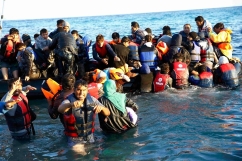
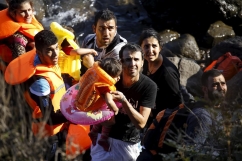
An entire generation of Syrian children is at risk, Human Rights Watch (HRW) said today, as a new report revealed that more than 400,000 refugee children living in Turkey do not have access to education.
The 61-page report, 'When I picture my future, I see nothing': Barriers to education for Syrian refugee children Turkey', found the vast majority of refugee children are not enrolled in formal schooling. Despite attempts by the Turkish government – which has accepted more than two million refugees from Syria since the conflict began four years ago – to allow Syrian children access to public schools, obstacles remain.
Of the 708,000 school-age Syrian children currently seeking refuge in the country, just over 212,000 were enrolled in formal education in the year 2014-15.
The problem is even more far-reaching. An estimated nine million Syrians have fled their homes since the outbreak of civil war in 2011, and UNICEF believes that in total, nearly three million Syrian children both inside and outside the country are now not going to school. Before the war, almost every child in Syria was enrolled in primary or secondary education.
According to Turkey's Ministry of National Education, almost 90 per cent of children living in its refugee camps are going to school, but the majority of refugees live outside of formal camps, where enrolment is far lower.
"Failing to provide Syrian children with education puts an entire generation at risk," HRW's Stephanie Gee said.
"With no real hope for a better future, desperate Syrian refugees may end up putting their lives on the line to return to Syria or take dangerous journeys to Europe."
11-year-old Radwan used to go to go to school in Syria but now works 12 hours per day, seven days a week in Turkey to provide for his widowed mother and younger siblings.
"I loved school," he told HRW. "I liked to study maths, and I miss going to school very much."
HRW's report praised the Turkish government's decision in September 2014 to offer all Syrian refugees access to the public school system. However, there are many practicals obstacles that remain meaning that few Syrian children are able to take advantage of the government's offer.
Many Syrian children are unable to attend school because of the language barrier and others face bullying and struggle with social integration. There is also a lack of information about enrolment and the offers available, the report found.
Rasha, 16, fled from her home in Qamishli, Syria in 2013, and now lives in Izmir, west Turkey. Though she was able to attend school initially, she was told to enrol in a class with her peers and was unable to keep up with the language difference. She wasn't allowed to start in a lower grade.
"Now that I can't go to school, it's a tough situation. It's hard to get used to it. I work occasionally, filling in for my sisters at the factory," she told researchers.
"When I picture my future, I see nothing."
There are fears that lack of education among Syrian refugees is contributing to a rise in early marriage, the recruitment of children by armed groups and child labour.
HRW is calling on the Turkish government to improve access to education in the country by addressing the barriers currently in place.
"Refugees' rights should be respected not only when they first cross a border seeking safety, but also throughout their experience of being displaced, and that includes their right to education," Gee said.
"Donors and the Turkish government should ensure that Syrian children are in school to provide them with stability now as well as to safeguard their futures in the long run."
HRW's report is the first of a three-part series addressing the urgent issue of access to education for Syrian refugee children in Turkey, Jordan, and Lebanon.