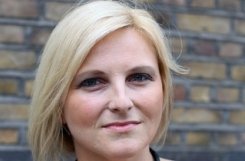
Is Victoria Wasteney a martyr, bravely suffering persecution for her faith at the hands of a godless NHS? Or did she make inappropriate and unwanted attempts to share her Christian faith with a Muslim junior, abusing her superior position and causing her significant distress?
According to her backers, the Christian Legal Centre (CLC), it's most definitely the former. According to the judge in the Employment Appeal Tribunal (EAT), it's the latter.
Wasteney worked for the East London NHS Foundation Trust as head of forensic occupational therapy, a senior and responsible position. She was given a final written warning by the Trust for three charges of misconduct – praying with 'EN', a Muslim junior colleague of Pakistani heritage, giving her a book about a Muslim woman who converts to Christianity (the classic I dared to call him Father) and inviting her to church events. On appeal, this had been reduced to a first written warning. Wasteney had claimed unlawful discrimination and harassment because of religion or belief. Her claim was dismissed, and now her appeal has been dismissed as well.
According to the CLC, the ruling "raises serious questions as to whether any Christian in a position such as Victoria's will be protected, if they manifest their faith in the workplace."
Wasteney herself said: "I believe the NHS singled me out for discipline because Christianity is so disrespected."
The 'martyr' narrative plays very well with some sections of the Christian world. It reflects a belief that Christians are a persecuted minority and that the State has it in for us, preferring to cosy up to Muslims rather than defend the UK's native faith. It's a narrative Wasteney seems to subscribe to. She also said: "Previously a Christian worship service that I set up for patients was closed down, but accommodation for Muslims to practise their faith wholly facilitated and encouraged."
It's an instructive parallel. Details of this service can be found in a previous ruling, which makes it clear that once again, there were serious and legitimate questions over Wasteney's behaviour. She had asked her line manager whether her church could provide services for the Trust at its John Howard Centre. This was agreed on the understanding that the new group would be a "broadly based, ecumenical worship group meeting the needs of service users across a range of Christian denominations".
It became clear that this is not what was happening. Staff members felt they were being pressurised to dance, sing and clap at services, that they were being encouraged to donate to the church rather than to charity and that negative views were expressed about other religions. The services were suspended because of blurred boundaries and because they were conducted inappropriately, not because of anti-Christian and pro-Muslim bias.
In terms of the EAT, Her Honour Judge Eady QC examined the previous tribunal's ruling in minute detail. She found that it was quite right to rule that Wasteney's treatment was not because of her beliefs, but because of her inappropriate behaviour. The case, despite her counsel's arguments to the contrary, had nothing to do with her freedom to manifest her religious belief; the Trust "took the actions it did because the colleague in question had made serious complaints about acts which blurred professional boundaries and placed improper pressure on that colleague". Wasteney "subjected a subordinate to unwanted and unwelcome conduct, going substantially beyond 'religious discussion', without regard to her own influential position".
Anyone reading these two judgments would be entitled to conclude Wasteney is not, in fact, a martyr to religious freedom but has behaved rather unwisely and improperly – though with the sincerest of motives. There are, though, three dangers here.
One is that cases like this create a chilling effect on normal human interaction at work, which ought, as a matter of course, to be able to include conversations about religion. It's a normal activity and talking about it shouldn't be suspicious. If Christians, Muslims or Hindus feel that religion is off-limits at work because of cases like this, we are heading in a direction we really don't want to go.
Second, it will discourage workplace HR departments from making concessions or provision for religion. An attempt to set up services for staff and patients went wrong. Instead of an acceptance that it was a failed experiment, the incident has been used – entirely unconvincingly – as evidence of anti-Christian bias. This feeds the belief that religion is just toxic and the best thing to do is ban it from the workplace altogether.
Third, it is being used to bolster a view of Christian faith which is simply not tenable. In her comments on the case, CLC chief executive Andrea Williams said: "Our legal system was founded on Christian values and yet we now see that it is one of the most liberal and anti-Christian legal systems in the Western world.
"We need a radical review of the balance of rights in this country which is skewed to favour religions and ideologies other than Christianity. This is ironic given that it is Christianity that has given our society freedom, tolerance and hospitality."
But the legal system is not anti-Christian. It is not skewed against Christianity. Wasteney lost her case because it was weak in law, not because there's anything wrong with the law. A Muslim exerting similar pressure on a vulnerable Christian would have been treated exactly the same way. Christians should be vigilant and should demand a level playing field for their faith. But they shouldn't be crying persecution every time a judgment goes against them. The chances are the court was right and they were wrong.
Follow Mark Woods on Twitter: @RevMarkWoods