
The Vatican's top man for relations with Islam on Tuesday criticised the Archbishop of Canterbury as mistaken and "naive" for suggesting that some aspects of Sharia law in Britain were unavoidable.
Cardinal Jean-Louis Tauran, in a wide-ranging discussion with reporters about Christian-Muslim relations, also said he was confident that a new, permanent body between the Vatican and Muslims would help defuse misunderstandings in the future.
"I think it was a mistake, a mistake because, above all, one has to ask what type of Sharia. And then, it was a bit naive," Tauran said in answer to a question at a breakfast meeting.
Archbishop of Canterbury Rowan Williams sparked a religious and political storm in Britain and beyond last month when he raised the prospect of Islamic law in the United Kingdom.
Williams, spiritual leader of the world's 77 million Anglicans, provoked a string of tabloid headlines with the best-selling Sun launching a campaign for him to quit.
"One can understand his good intentions but it seems to me he did not take into consideration either them (the Muslims), the English juridical system, or the reality of Sharia," said Tauran, president of the Vatican's Pontifical Council for Interreligious Dialogue.
Sharia, the body of Islamic religious law based primarily on the Koran, as well as the sayings and deeds of the Prophet Mohammad, has been attacked by many in the West over its treatment of women and punishments for adultery and apostasy.
The row fed into a broader debate on integrating Britain's 1.8 million Muslims. This issue assumed greater urgency after suicide bombings by British Muslim militants killed 52 people in London's transport system in July 2005.
Tauran said: "It is not just a question of good will. There are juridical aspects that are not reconcilable (with Sharia)".
Williams later sought to clarify his position, saying he was not advocating parallel systems of law and stressed he was not endorsing the harsh punishments meted out in countries such as Saudi Arabia and Iran.
But he was unrepentant about raising the subject in the first place.
Tauran will be the Vatican's top man in a permanent official dialogue with Muslims to improve often difficult relations and heal wounds still open from a controversial papal speech in 2006.
The Catholic-Muslim Forum, agreed last week, will meet in Rome in November with 24 religious leaders and scholars from each side. Pope Benedict will address the group, due to meet formally every two years.
Catholic-Muslim relations nosedived in 2006 after Benedict delivered a lecture in Regensburg, Germany, that was taken by Muslims to imply that Islam was violent and irrational.
Asked if meeting every two years was too little, Tauran said committees would meet more often and have an emergency mechanism.
"There will be a sort of hot line always available if we need to talk and meet about a problem or take an initiative," he said.




-

European hate speech laws are ‘dangerous’, says politician prosecuted for Christian beliefs
-

Ex-BBC reporter tells of 'cabal' of journalists who influenced trans coverage
-

Belfast City Council votes again to celebrate abortion after failed attempt
-

NI conversion therapy ban 'dead in the water' after consultation
-
The Church of England should repent for previous calls to ban 'conversion therapy'
-
Why John Stott’s ‘Christian Counter-Culture’ still challenges the church
Most Popular
News
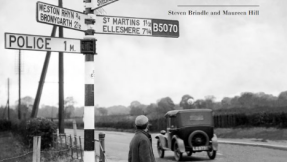
Faith in difficult times: lessons from 1930s Britain
Architectural historian Steven Brindle talks to Christian Today about the faith that shaped 1930s Britain, the churches that supported struggling communities and what lessons the decade might have for us today.

Campaign aims to mobilise 500,000 Christians for Christmas outreach
Shine Your Light is aiming to mobilise half a million Christians to share the gospel with five million people across the UK this Christmas, with more than 2,000 churches already signed up, organisers say.
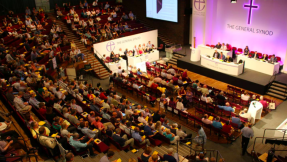
The Church of England should repent for previous calls to ban 'conversion therapy'
The Church of England's uneasiness about the government's ‘conversion practices’ bill is a perfect lesson in the old adage, 'be careful what you wish for,' writes Dr Martin Davie.
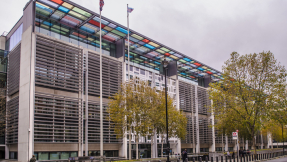
Leaked Home Office report links 'Christian extremism' to traditionalist beliefs and immigration concerns
An internal Home Office report lists concerns about immigration, multiculturalism and changing social values among the characteristics associated with what it calls "Christian extremism", it has been reported.





