The U.S. government has admitted that it can accommodate the religious objections to the Affordable Care Act's contraceptive mandate, giving fresh hopes that five years of disagreement on the issue could now be amicably resolved.
Senior counsel Mark Rienzi of the Becket Fund for Religious Liberty said this could mean victory for religious organisations, colleges and schools that are challenging the mandate before the U.S. Supreme Court.
"The government has now admitted 'yes, we can get people contraceptives without involving nuns,'" said Rienzi, according to the Cardinal Newman Society. "That's a pretty logical point. It shouldn't have taken five years of litigation to admit that, but it's good that they have admitted it. And now it's a pretty easy path to consensus for the Court."
The Supreme Court last month asked the U.S. government and the petitioners that are against the contraceptive mandate to submit additional briefs about ways in which contraceptive coverage could be provided to employees without violating the religious freedom of employers.
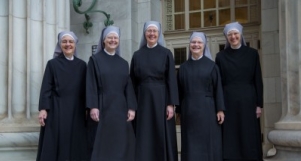
Seven cases under the Zubik v. Burwell case are with the court including the Little Sisters of the Poor, Thomas Aquinas College (TAC) in Santa Paula, California, and The Catholic University of America (CUA) in Washington, D.C.
The plaintiffs told the Supreme Court that there are ways to provide contraception without the involvement of religious organisations.
These include allowing the insurer to provide the coverage without notification from the religious objector, or mandating that the government provide the coverage free of charge when it is not included in a religious organisation's health plan.
"The claim has always been 'I just can't be involved, you can do whatever you want but you have to leave me out of it,'" Rienzi said.
Under the Affordable Care Act, religious organisations wanting to opt out of the contraceptive mandate have to notify the insurer through EBSA 700 or equivalent form.
The main issue is to make sure that any contraception, sterilisation or abortifacient coverage is completely separate.
"If it's really truly separate from us, that's fine," Rienzi said. "We've actually always been saying yes to things that are truly separate. And from our point of view, the government just really needs to take yes for an answer here."
Rienzi said the government admitted that the alternatives are possible.
"They do come out and say, 'yes, Court, you could do this,'" Rienzi said. "That's good news because that gives the Court a pretty clear path to consensus."
Catholic education leaders have said that they are against contraception and will protect religious freedom.
"While we strongly disagree with the government's policy on this matter, we are pleased that the court appears to be looking for a way to insure that religious organisations do not have to be complicit in providing objectionable insurance coverage," said TAC President Michael McLean.
The U.S. Supreme Court is expected to issue a decision in June.