Venezuela's opposition vowed on Monday to revive the OPEC nation's troubled economy and free jailed political activists after winning control of the legislature for the first time in 16 years of Socialist rule.
By Monday evening, some results from Sunday's election were not yet in, but the Democratic Unity coalition had already won a commanding majority in the 167-member National Assembly, opening a new chapter in the polarised country's politics.
Opposition leaders said final tallies showed they won a two-thirds majority, or at least 112 seats. That would let them flex their muscles against President Nicolas Maduro by shaking up institutions such as the courts and election board, widely viewed as pro-government.
There was no confirmation of that from the election board, which had yet to announce the results of 22 legislative contests.
Maduro, 53, quickly accepted defeat in a speech early on Monday that calmed fears of violence in a country long riven by political strife.
The government was mostly quiet on Monday after voters punished its candidates for an economic crisis that includes shortages ranging from antibiotics to shampoo and steep inflation that is ravaging salaries.
"It's a great opportunity for us, this protest vote," opposition leader Henrique Capriles said following the win.
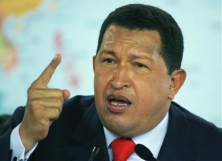
After securing control of the National Assembly from the "Chavismo" movement, named for late former socialist President Hugo Chavez, opposition leaders quickly set out their priorities.
Coalition head Jesus Torrealba said its lawmakers would seek to modify the Central Bank law in an effort to cut back on the amount of money being printed, a key factor in Venezuela having the world's highest inflation rate.
Although it will not have the power to radically the economy from the legislature, the opposition is promising new laws to stimulate the private sector and to roll back nationalisations.
It also wants to pass an amnesty law for detained opponents of Maduro when the new assembly begins work on January 5.
Venezuela's best-known jailed politician is Leopoldo Lopez, who was sentenced to nearly 14 years on charges of promoting political violence in 2014 that killed 43 people. But the opposition has a list of what it says are more than 70 other political prisoners.
Bonds rise
Investors reacted positively to the OPEC nation's swing away from the radical left, with dollar bonds rising strongly on hopes of business-friendly change.
The election board said early on Monday the opposition had won 99 seats to the Socialists' 46.
With that lead, the opposition will be able to control the budget, open investigations that could embarrass the government and fire ministers.
Torrealba has also said the assembly will open an investigation into the arrest of two nephews of Maduro's wife, caught last month in a sting operation in Haiti and indicted in a New York court on charges of cocaine smuggling.
The United States, which has had an acrimonious relationship with Venezuela under both Chavez and Maduro, has long accused the Socialists of complicity in the drug trade, as well as human rights abuses.
The government dismisses those charges as lies and frequently recalls Washington's support for a short-lived 2002 coup against Chavez.
US Secretary of State John Kerry said the election on Sunday showed Venezuelans' "overwhelming desire" for change and he urged dialogue among political parties to resolve problems.
A senior US official suggested countries from the 12-member Union of South American Nations, which sent a mission to observe the elections, might be able to play a role in helping Venezuelan parties find ways to work with one another.
A former bus driver and foreign minister who narrowly won election in 2013 after Chavez died from cancer, Maduro may face a backlash in the ruling party and from grassroots supporters who think he has betrayed his predecessor's legacy.
Although his term ends in 2019, hardline opposition leaders want to oust him in a recall referendum next year. They would require nearly 4 million signatures to force the recall vote.
"I can't see this government finishing its term because it is too weak," said opposition leader Henry Ramos, touted as a possible leader for the new assembly. "Internal frictions are beginning. They're blaming each other for this huge defeat."
"Counter-revolution"
Maduro, whose government has replaced Cuba as Latin America's most vocal adversary of the United States, blamed the election defeat on an "economic war" waged by business leaders and other opponents to sabotage the economy and bring him down.
His persistence with complex currency and price controls has contributed to Venezuela's economic distortions. Unlike Chavez, he has also had to contend with a plunge in the price of Venezuela's only significant export, oil.
"This is Nicolas Maduro's defeat, not Chavez's," said Humberto Lopez, 57, a diehard Chavista well-known to Venezuelans for walking the streets dressed as Argentine revolutionary Ernesto "Che" Guevara. "I'm not hugely surprised."
Underlining the new mood in Venezuela, videos online showed five prominent socialist politicians – including Chavez's brother Adan – being booed at voting centres on Sunday, with crowds yelling: "The government will fall!" or "Thief!"
The opposition said "Chavismo" had failed to win a single district in the late leader's home state of Barinas, once a bastion of support.
"If you called yourself "Chavista" and you voted for the opposition, facts will prove your mistake," tweeted National Assembly head Diosdado Cabello, who was re-elected as a legislator but will lose his leadership of the body.
The government's defeat was another disappointment for Latin America's bloc of left-wing governments following Argentina's swing to the centre-right in last month's presidential election.
But regional leaders praised Maduro for accepting defeat so quickly. Words of consolation came from the Venezuelan government's closest ally, Communist-run Cuba.
"I'm sure new victories for the Bolivarian and Chavista Revolution will come under your leadership," President Raul Castro wrote to Maduro, referring to Venezuelan independence hero Simon Bolivar as well as his late friend Chavez.