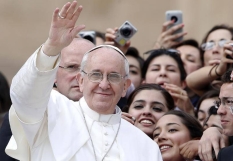
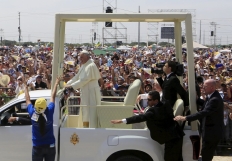
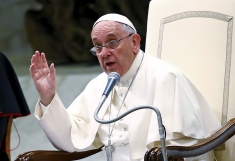
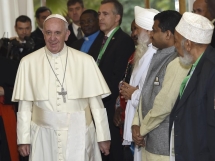
Here in Krakow, at Catholic World Youth Day, the atmosphere is electric. A sea of flags bearing the colours of almost every nation in the world serves as a vibrant reminder that over a million young people have travelled from all corners of the globe to build bridges across cultures and celebrate their faith together. Joyous faces abound at the myriad concerts, sports tournaments and workshops on offer. And the times and locations of the masses and speeches to be held by Pope Francis himself are engraved in everyone's minds.
This is not to say that young Catholics have forgotten about the outside world, however – quite the opposite. Events in the past days and weeks – from multiple terrorist attacks including the recent killing of a French priest to deadly flooding in China – are at the forefront of everybody's thoughts. The Catholic Church has never been about celebration for celebration's sake. By celebrating the gifts and values that matter most to us, we are simultaneously pledging to do our best to preserve them.
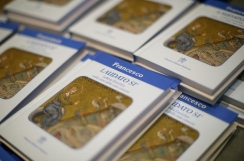
The Pope's June 2015 encyclical, Laudato Si', laid out some of these gifts and values, as well as the threats to them, very clearly. In the encyclical, Pope Francis writes: "The earth, our home, is beginning to look more and more like an immense pile of filth." By driving the senseless over-consumption of natural resources and fossil fuels such as coal, oil and gas, the economic systems we have created are polluting our air, destroying our forests, increasing the number of extreme weather events we're faced with due to climate change, and generally undermining human dignity, particularly of the poorest. The effects of this abuse are more pervasive than most realise: Pope Francis notes a link between climate change and an increase in the forced migration of the poorest to other countries, for example.
Add to that the events of past few days and you would be forgiven for thinking that such a depressing state of affairs would leave young people, including those gathered at World Youth Day, dejected and hopeless. Not so. Pope Francis writes in his encyclical: "Young people demand change. They wonder how anyone can claim to be building a better future without thinking of the environmental crisis and the sufferings of the excluded." But even he would be pleasantly surprised by how young people have reacted since the release of his Laudato Si'.
Together with other young people from the Global Catholic Climate Movement, of which I am a co-founder and Global Coordinator, I have spent my time at the Laudato Si' Eco-Village in Krakow speaking to young Catholics about how we can all live more sustainably. I have shared some good ideas, and heard a great deal of new ones. Under the hashtag #LiveLaudatoSi, many of the people I've spoken to have pledged on social media to cycle to work, engage in climate activism, eat less meat and encourage their parishes to install solar panels on church rooftops, among other things.
It has begun! #WorldYouthDay #LiveLaudatoSi pic.twitter.com/WrUpMLP3NZ
— Roberto Stefano (@BamAzores) July 27, 2016 " data-caption="null" data-credit="null">As well as pledging to act themselves, young Catholics have been asking governments to invest in their future and work with them to create a better world. On Monday, the Polish and Italian Ministers of the Environment met Vatican officials in Krakow for a conference on the encyclical and young people as protagonists for change. Meanwhile, the International Movement of Catholic Students (IMCS) and International Young Catholic Students (IYCS), representing over 10 million Catholic students worldwide, called on their heads of state to invest now in the sort of ethical, sustainable jobs that they want to occupy when they hit the job market – such as those in clean energy – and phase out investment in fossil fuel jobs that can have no long-term future if we are to tackle climate change.
While Laudato Si's depiction of the ecological crisis can appear overwhelmingly deeply troublesome, then, its translated title – 'Praise be to you' – shows us that it is above all a celebratory text, urging us to strive to preserve our planet and reminding us how fantastic a gift it truly is. Conversations with other young people over the last few days in Krakow have reassured me that this is a message that the Laudato Si' Generation understands – and the future looks brighter because of it.
Tomas Insua is Founding Coordinator of the Global Catholic Climate Movement and a Fulbright Scholar at Harvard Kennedy School.