Eight facts you didn't know about Hajj 2015:
1. The Hajj is a pilgrimage to Mecca in Saudi Arabia and is one of Islam's core religious duties. It has to be carried out by every adult Muslim who is physically and financially able to do so. This year it starts on September 21.
2. Around 2 million people travel to Mecca every year for the Hajj, which lasts for six days. It used to be a dangerous and difficult journey in which pilgrims would be beset by bandits and lost in the wilderness. Now they just get on a plane.
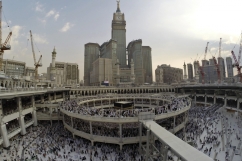
3. The pilgrims visit the massive Al-Masjid Al-Haram mosque and walk seven times anti-clockwise round the Kaaba, a black box-shaped building surround a black stone.
4. Other activities include 'the stoning of the devil'. Pilgrims travel to Mina, a small village about 5km from Mecca, where they throw pebbles at stone pillars which represent the devil. They also drink the water of the Zamzam well, located 20m east of the Kaaba, as it is thought to have special properties.
5. Non-Muslims are strictly forbidden from entering Mecca, though they have occasionally done so. One of the first Europeans – and certainly the first Englishman – to undertake the Hajj was Richard Burton, the author, linguist and all-round man of action, who did so in 1853. He disguised himself thoroughly and even had himself circumcised in case he were required to prove he was Muslim. He later wrote, "nothing could save a European detected by the populace, or one who after pilgrimage declared himself an unbeliever".
6. The numbers of pilgrims create serious crowd control problems, which Saudi Arabia has struggled with. A stampede in 1990 killed 1,426 people. Another in 1994 killed 270 at the stoning of the devil ritual, a venue which also claimed lives in 1998 and four subsequent years. One problem was that the bridge leading to the pillars was too narrow; it has now been demolished.
7. The Hajj has also seen outbreaks of secretarian violence - 400 people died in 1987. Both Sunni and Shia Muslims undertake it and this year Saudi Arabia has caused alarm by asking pilgrims to declare which they are.
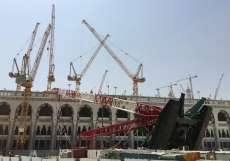
8. On September 11 a huge crane collapsed on to the Grand Mosque, killing 118 people and injuring nearly 400. Contractors had been working to expand the site to cope with the numbers of people expected.
Follow @RevMarkWoods on Twitter.