
|PIC1|Though the scientists say it’s too soon to use excess fat to cure diseases, it could, in theory, allow people to grow personalized replacement parts for ailing organs as many stem cell researchers are seeking to do.
"Imagine if we could isolate fat cells from a patient with some type of congenital cardiac disease," said cardiologist Joseph Wu, senior author of the paper published in Monday's Proceedings of the National Academy of Sciences.
"We could then differentiate them into cardiac cells, study how they respond to different drugs or stimuli and see how they compare to normal cells. This would be a great advance," he reported, according to the Stanford University Medical Center.
Furthermore, because the "induced pluripotent stem cells" don’t come from embryos, their utilisation would sidestep the controversy that surrounds embryonic stem cell research, which requires the destruction of human embryos.
"There's an abundance of fat cells in this country," Wu told the San Jose Mercury News.
"And we could transform them into brain, hair, eye cells - or whatever you can think of," he added.
So far, Stanford researchers have proven that fat cells can differentiate into cells from the three main tissue types of the body, including neurons, muscle and lining of the gut.
Though scientists at the University of California in Los Angeles, the University of Melbourne and other institutions have found ways to turn fat cells into other specific cells – such as muscle – no one, until now, was able to transform them into embryonic-like cells.
According to Stanford surgery professor and co-author of the research Michael Longaker, the field now needs to move forward in ways that the Food and Drug Administration would approve – with cells that can be efficiently reprogrammed without the risk of cross-species contamination.
"The idea of reprogramming a cell from your body to become anything your body needs is very exciting," he commented.
In addition to Wu and Longaker, other Stanford collaborators on the research include postdoctoral scholars Ning Sun, Nicholas Panetta, Deepak Gupta, , and Shijun Hu,; graduate student Kitchener Wilson; medical student Andrew Lee; research assistant Fangjun Jia; associate professor of pathology and of pediatrics Athena Cherry; and professor of cardiothoracic surgery Robert Robbins.
The research at Stanford was supported by the Mallinckrodt Foundation, the American Heart Association, the California Institute for Regenerative Medicine, the National Institutes of Health, the Stanford Cardiovascular Institute, the Oak Foundation and the Hagey Laboratory for Pediatric Regenerative Medicine.




-

Why the Archbishop of Canterbury’s award controversy matters
-

More than one in four US Protestant churchgoers believe some biblical truths become outdated
-

Christian leaders issue ‘sober and urgent call’ for Western Church to prepare for disruption
-

Australia's anti-therapy laws harm the most vulnerable - Britain should not copy them
-

Songs of Praise celebrates 65 years with special anniversary episode - and finds a new generation online
-

First segments of Eternal Wall of Answered Prayer near Birmingham completed
Most Popular
News
400% increase in euthanasia deaths in Australian state of Victoria
Right To Life UK said the surge in numbers showed why UK MPs were right to reject assisted suicide.

Ukrainian churches appeal for aid in starving Oleshky
Russia and Ukraine have blamed each other for the crisis in Oleshky.
Westminster Abbey plans memorial to JRR Tolkien
The memorial will go next to that of his friend CS Lewis.
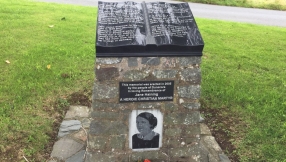
Scottish Parliament honours missionary who died in Auschwitz
MSPs said they hoped Haining's example would resonate with people at a time of rising hate crime and antisemitism.








