
MADRID (Reuters) - Decades of immunity to bad publicity seem to have ended for Spain's King Juan Carlos, who is suffering an "annus horribilis" with his picture burnt on the street and family strife spilling into the open.
Even a small victory, when on Tuesday a judge fined two cartoonists for an obscene magazine cover depicting Crown Prince Felipe, was spoiled for the king by the announcement just hours later that his eldest daughter was separating from her husband.
The week had already started badly, with Venezuela's President Hugo Chavez demanding an apology from Juan Carlos, who had told him to "shut up" at an Ibero-American summit in Chile.
Spanish newspapers printed headlines dubbing the king's troubles his "annus horribilis" -- a reference to the Latin phrase, meaning horrible year, popularised by the Queen during a rough patch of her own in 1992.
"The customary serenity of Juan Carlos as well as the experience of his staff have been put to the test in this annus horribilis," wrote Barcelona newspaper El Periodico in its editorial, adding that nonetheless the monarchy might emerge strengthened from its trials.
One element of the king's troubles has been family misfortunes too grave to be ignored by Spain's media, usually much more respectful of royal intimacy than its British equivalent.
The first wave of personal trouble came in February, when Prince Felipe's sister-in-law died of an overdose of tranquilisers.
Felipe was back in the news in July, when a satirical magazine depicted him having sex on its front cover. Then came his sister Elena's separation.
But this year has also been the first since Spain's transition to democracy -- during which the king famously intervened to help suppress an attempted military coup in 1981 -- that Juan Carlos has found himself dragged into politics.
IDENTITY CRISIS
A bitter debate about Spanish national identity has raged all year, and the king's position as a national symbol made him a target.
Young radicals seeking independence for the region of Catalonia took to burning his photograph in public, leading the king to make an unprecedented public defence of the monarchy in October.
But he has also came under attack from an unexpected quarter: a strongly monarchist presenter on a popular radio station owned by the Catholic Church who has called on him to abdicate, in part for failing to do more to protect Spanish institutions.
Members of the governing Socialist Party said the attacks were the result of frustration in conservative circles with the king, who is seen as getting on better with left-leaning politicians.
"The far-right can't stand the fact that the king is not one of them," said a former defence minister, Jose Bono.
Yet despite his travails, the king is considered to be broadly popular. Opinion polls on the subject of the monarchy are relatively rare, but one showed the crown to be the third-most trusted institution in the country.
Ironically, the one recent incident in which the king himself clearly violated rules of protocol, telling Chavez to "shut up", might be the one to make him more popular.
In the words of philosopher Fernando Savater, many Spaniards see the king's behaviour towards the Venezuelan as a fitting response to "a first class fathead."
(Reporting by Jason Webb)




-

The dire American political situation: a brief overview for faithful Christians in Britain
-

Conversion therapy ban supporters want prayer to be criminalised - this must not be allowed
-

Why the US election results do not bode well for America
-
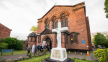
Police appeal for witnesses after head smashed off Jesus statue at church war memorial
-

Are we seeing the end of Western civilisation?
-

Archaeologists may have discovered identity of mystery skeleton in Westminster Abbey
Most Popular
News

Calls for inquiry into Queensland assisted suicide system
Despite the rise in deaths, the watering down of safeguards has been proposed.
Justin Welby says government reparations for slavery a ‘moral evil’
Welby was supportive of Project Spire during his time as Archbishop of Canterbury.
South Sudanese churches work for peace as tensions mount
South Sudan is the world's youngest sovereign nation.
Alister McGrath: New Atheism has ‘tanked’
“I am seeing a growth in young people wanting to talk about Christianity."





