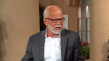
Samuel Escobar Aguirre, a leading Peruvian theologian, missiologist and Bible scholar, died this week at the age of 90.
Born in Arequipa, Peru, in 1934, Escobar devoted his life to serving the church and advancing theological reflection from a distinctly Latin American perspective. He became one of the most influential voices in the global evangelical movement, helping to shape the emergence of Latin American Evangelical Theology by offering a contextualized vision of Christian faith amid the continent’s social, political and cultural realities.
Escobar played a leading role in the historic 1974 International Congress on World Evangelization in Lausanne, Switzerland, convened by Billy Graham. There, he worked alongside René Padilla, the Ecuadorian-Argentine theologian and longtime collaborator, and John Stott, the renowned British evangelical leader and principal author of the Lausanne Covenant, a foundational document for contemporary evangelical missions.
The Lausanne Congress marked a turning point for the global evangelical movement, laying the groundwork for an understanding of Christian mission that integrated evangelism with social responsibility. Escobar, along with Padilla, was one of the key advocates for the concept of integral mission — proclaiming the gospel of Jesus Christ both in word and in action, addressing both material and spiritual poverty.
Throughout his career, Escobar also played a crucial role in the Latin American Theological Fellowship (Fraternidad Teológica Latinoamericana, or FTL), which he co-founded to provide a space for dialogue, critical thinking, and ministerial collaboration among evangelical leaders across Latin America. He served as president of the International Fellowship of Evangelical Students (IFES) and taught at theological institutions in Peru, Canada and Spain.
The author of numerous influential works — including The New Face of Latin American Protestantism, The Evangelical Faith and Contemporary Culture, and A Time for Mission — Escobar tackled critical issues such as integral mission, the believer’s social responsibility, and biblical faithfulness in challenging contexts.
Those who knew him remember his humility, tireless passion for teaching, and remarkable ability to build bridges between generations and across Christian traditions. Until his final days, Escobar lived in Valencia, Spain, where he remained active as a speaker, writer, and mentor to emerging Christian leaders.
Escobar’s passing leaves a profound gap in evangelical theological and missional reflection. Yet his legacy lives on through his writings, his students, and the many initiatives he inspired over his fruitful lifetime.
Samuel Escobar Aguirre (1934–2025) is remembered with deep gratitude.