MPs last night moved forward with plans to impose buffer zones around abortion clinics across England and Wales.
The House of Commons voted 299 to 116 against an amendment introduced by Andrew Lewer MP to protect silent prayer and consensual conversations.
MPs then passed Clause 10 of the Public Order Bill, which criminalises all forms of "influence" near abortion clinics, by voice vote.
Introducing his amendment, Mr Lewer warned that the Bill risks causing "reputational damage" to the police.
He said that arrests for silent prayer were "entirely unacceptable in a free and open society".
"I understand that many people will find it highly inappropriate for vocal or difficult protests to be held right outside abortion clinics, and I categorically condemn harassment against women at all points in their life, let alone near an abortion facility," he said.
"However, that is a world away from the police being able to detain people and question them over what they are doing if they are merely standing there or praying quietly—or worse, if they are praying silently and are then asked by the police, agents of the state, 'What are you thinking about?'"
Speaking during the debate, DUP MP Ian Paisley said the police will become "a laughing stock".
"People will be mocking them, saying, 'What about all the knife crime and all the other problems that you have? And you are arresting people for silently praying.' This provision really does make a fool of the police, does it not?"
Alithea Williams, Public Policy Manager at the Society for the Protection of Unborn Children (SPUC), called the outcome of the vote a "sad day" for democracy and the unborn.
"It is very disappointing that MPs have rejected even this modest amendment, which was trying to ensure that thoughtcrime was not enshrined in UK law," she said.
"Introducing buffer zones already means that ordinary citizens will be branded criminals and subject to crippling financial penalties for witnessing peacefully and offering help to women in need."
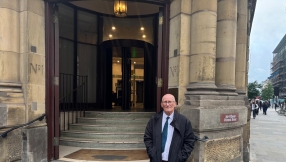
The vote came a day after the arrest for a second time of pro-life volunteer Isabel Vaughan-Spruce for praying silently outside a Birmingham abortion clinic that has a buffer zone in place.
She was arrested again despite Birmingham Magistrates' Court just a few weeks ago clearing her of all charges following an arrest outside the same clinic for silent prayer last year.
Her legal counsel, Jeremiah Igunnubole, of the Alliance Defending Freedom (ADF UK), said that the vote in Parliament marks a "watershed moment for fundamental rights and freedoms in our country", and will lead to more arrests for thought crimes.
"Parliament had an opportunity to reject the criminalisation of free thought, which is an absolute right, and embrace individual liberty for all," he said.
"Instead, Parliament chose to endorse censorship and criminalise peaceful activities such as silent prayer and consensual conversation.
"Today it's abortion. Tomorrow it could be another contested matter of political debate. The principle remains that the government should never be able to punish anyone for prayer, let alone silent prayer, and peaceful and consensual conversation.
"Thankfully, where the clause initially called for a prison sentence for those convicted of engaging in these peaceful activities near abortion facilities, the penalty now has been reduced to a fine.
"Nevertheless, it is extremely regrettable that Parliament, which exists to protect and champion the rights of the electorate, has taken a clear stance against fundamental freedoms, opening the door for nationwide thought-crime prosecution."