Russell Moore is not an evangelical. Or rather, he doesn't want to be labelled as one, at least until the US presidential election is over.
The president of the Ethics & Religious Liberty Commission of the Southern Baptist Convention has started introducing himself as a "gospel Christian" to avoid the word "evangelical", he says.
"The word 'evangelical' has become almost meaningless this year, and in many ways the word itself is at the moment subverting the gospel of Jesus Christ," Moore wrote in an editorial for The Washington Post, explaining why he had ditched the label.
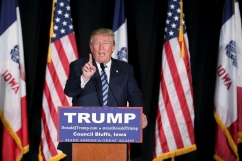
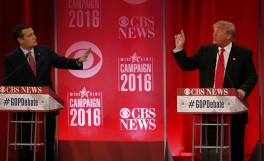
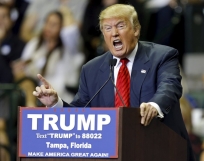
The theologian barely disguised his ridicule for leaders who have endorsed Republican frontrunner Donald Trump. President of Liberty University Jerry Falwell Jr announced his official support for Trump in January, and Franklin Graham, son of famous preacher Billy Graham, has also declared his support for a number of Trump's policies.
"Why are many evangelical leaders, including some who pontificate on nearly everything else, scared silent as evangelicalism is associated with everything from authoritarianism and bigotry to violations of religious freedom?" Moore asked.
He argued the term evangelical has been misunderstood and misapplied, and Christians "have been too willing to look the other way when the word 'evangelical' has been co-opted by heretics and lunatics".
"The word 'evangelical' isn't, first of all, about American politics," he wrote. "The word is rooted in the Greek word for gospel, good news for sinners through the life, death, resurrection and reign of Jesus of Nazareth as the son of God and anointed ruler of the cosmos.
"Evangelical means a commitment to the truth of God's revelation in the Bible and a conviction that the blood of Christ is offered to any repentant, believing sinner as a full atonement for sin."
He also pointed out that polls don't distinguish between actual chuchgoers and those who self-identify as evangelical.
"Many of those who tell pollsters they are 'evangelical' may well be drunk right now, and haven't been into a church since someone invited them to Vacation Bible School sometime back when Seinfeld was in first-run episodes," he said.
The word "evangelical" no longer has any meaning. Just call me a gospel Christian.
— Russell Moore (@drmoore) February 26, 2016 " data-caption="null" data-credit="null">However Moore concluded on a note of optimism and said the "future of evangelicalism is vibrant".
"But you will forgive me if, at least until this crazy campaign year is over, I choose just to say that I'm a gospel Christian," he added. "When this fevered moment is over, we will need to make 'evangelical' great again."