
The Royal Society's director of education resigned last night after his comments on creationism last week kicked up a storm of controversy among anti-creationists.
Professor Michael Reiss, a biologist and ordained Church of England minister, said that science teachers should regard creationism "not as a misconception but as a world view" and be open to discussing it during science lessons if pupils raised the issue.
Royal Society Fellows, Nobel Prize winners Sir Harry Kroto and Sir Richard Roberts, were among those who called for Professor Reiss' dismissal saying that his religious views made him unsuitable for the job of education director at the Royal Society, the oldest scientific organisation in the world.
The Royal Society initially defended Professor Reiss, saying that his views were "completely in keeping with those of the Royal Society".
In a statement announcing his resignation, however, the Royal Society said that the professor's comments had been "open to misinterpretation".
"While it was not his intention, this has led to damage to the society's reputation," the statement read.
Professor Reiss will now return full-time to his post of Professor of Science Education at the Institute of Education.
The row over his position at the Royal Society broke out after he told a conference of the British Association for the Advancement of Science that teachers should respect pupils with sincere creationist beliefs.
"I realised that simply banging on about evolution and natural selection didn't lead some pupils to change their minds at all. Just because something lacks scientific support doesn't seem to me a sufficient reason to omit it from the science lesson . . . There is much to be said for allowing students to raise any doubts they have - hardly a revolutionary idea in science teaching - and doing one's best to have a genuine discussion."
The Royal Society said in its statement, meanwhile, that creationism "has no scientific basis" and that it should not be part of the science curriculum in schools, although science teachers "should be in a position to explain why evolution is a sound scientific theory and why creationism is not, in any way, scientific".
Reactions to Professor Reiss' departure have been mixed.
Lord Winston, Professor of Science and Society at Imperial College, was quoted by The Times as commenting: "I fear that the Royal Society may have only diminished itself. This individual was arguing that we should engage with and address public misconceptions about science - something that the Royal Society should applaud."
Phil Willis MP, the chairman of the Commons Innovation, Universities, Science and Skills Committee, was quoted by the newspaper as saying: "It is appropriate for the Royal Society to have dealt with this problem swiftly and effectively, rather than provoking continued debate. I hope the society will now stop burying its head and start taking on creationism."




-

Edinburgh University ends divinity programmes as theology faces a changing future
-

Why the Archbishop of Canterbury’s award controversy matters
-

More than one in four US Protestant churchgoers believe some biblical truths become outdated
-

Catholicism in France has 'collapsed'
-

Christian leaders issue ‘sober and urgent call’ for Western Church to prepare for disruption
-

Australia's anti-therapy laws harm the most vulnerable - Britain should not copy them
Most Popular
News

Active faith linked to happier marriages and lower divorce rates, study finds
People who regularly attend church are more likely to report happy marriages, according to a new report examining the relationship between faith and family life.

Indian churches fearing anti-conversion laws tell non-Christians: enter at your own risk
Churches in Dhamtari, a town in the central Indian state of Chhattisgarh, have put up notices warning non-Christians that they enter at their own risk, weeks after a law against religious conversion came into force in the state.

£1k bursaries to help churches develop youth and community mentoring programmes
Churches across the UK are being offered bursaries to help them establish mentoring programmes aimed at supporting young people and others in their communities.
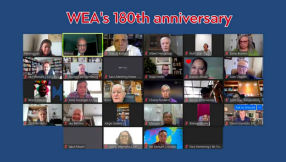
World Evangelical Alliance celebrates 180th anniversary
The World Evangelical Alliance (WEA) has held an online celebration to mark its 180th anniversary. Hundreds of people from more than 22 countries attended, and the event was rebroadcast to accommodate different time zones.








