Another worrying report out this week confirms what we already knew – that religious freedom is under threat in large parts of the world.
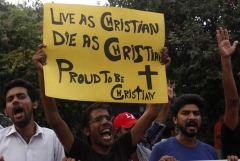
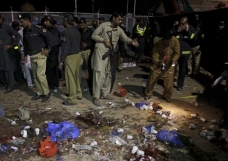
We're not talking here about small inconveniences to people of faith. We're talking about life-threatening persecution and a culture of fear that pervades whole communities.
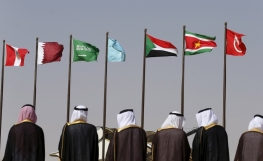
The report, from the US State Department, lists country after country in which it is dangerous to express certain forms of religious belief. From obvious offenders such as Saudi Arabia and Pakistan to the more recent persecutors such as ISIS and Boko Haram, the list is a reproach to the authorities in countries far and wide.
Why, though, do repressive regimes fear religious freedom so much? There are three reasons.
1. It is a different source of authority
"Jesus is Lord" may sound like a standard Christian claim to us in the West in the 21st century. But when it was first uttered and written down, in the 1st-century Roman Empire,it was a truly revolutionary statement. If Jesus is Lord, then Caesar is not. The Roman Empire depended not just on loyalty to the Emperor, but devotion to him.
Christians, by saying that Jesus is Lord, were making a political as well as a theological statement. NT Wright has shown just how prevalent this theme is in the New Testament. "In almost every letter Paul demonstrates that Jesus is Lord, and that Caesar isn't," he says. "The 'gospel' of Jesus upstages the 'gospel' of Caesar; that the true salvation is achieved through Jesus, not Caesar; that the world needs God's justice, not Roman justice; and, with great irony, that the cross, a hated symbol of Roman rule, had been transformed into the life-giving symbol of God's self-giving love. Paul's central arguments constitute a massive outflanking movement against the imperial rhetoric of his day (emperor-worship was the fastest-growing religion of the time)."
It is not hard to see how the Caesars of today find this undermining of their authority intolerable. The Chinese capitalist/communist regime is deeply threatened by Christianity. The autocratic Vladimir Putin in Russia is similarly threatened so curtails evangelism by non-Orthodox groups. The brutal regime in Eritrea continues to persecute Christians to shore up its control.
2. It is a structure to organise for change
It isn't just that people of faith (and specifically Christians) have a different source of authority. As well as pledging their allegiance to Jesus above the state, Christians also have an amazing capacity to organise for change.
Although Christianity has far too often been (mis)used to oppress and control people, in its essence it is a faith of freedom which inspires its followers to radical acts of upheaval against injustice.
The Solidarity movement which eventually brought an end to Soviet totalitarianism in Poland would have been impossible without the Christian faith of its leaders and also the support of the Pope.
The Civil Rights movement which gave hope of an end to the systematic abuse of African Americans by their government would never have happened if it hadn't been for large networks of organised Christians. When Rosa Parks resisted segregation on her bus, she wasn't a lone woman taking a stand. She was part of a well-organised resistance movement of women and men just like her that was dependent on the organisng power of churches and other institutions.
On many occasions, we have seen states that fear this organisational power and capacity move to intimidate or even kill those Christian leaders who spearhead freedom and justice efforts. Archbishop Oscar Romero was executed while he presided at mass in El Salvador. Dietrich Bonhoeffer was murdered in a concentration camp because of his commitment to organise and defeat Nazism from within Germany. Catholic priest Maximilian Kolbe (whose feast day is marked this weekend, August 14) met the same fate for his resistance of Nazi control. Archbishop Janani Luwum used his position as head of the Anglican Church in Uganda to denounce the crimes of dictator Idi Amin. He was tortured and murdered in 1977.
These leaders have shown the power of the Christian faith to win change. Sometime the change comes in their lifetime. Other times they pay the ultimate price, but their cause wins in the end. The powerful witness of these Christian women and men is a dangerous threat to any tyrant.
3. It is a different value system
Christianity isn't primarily a system of government. It has many things to say to those in power and many political theories do come from the Christian worldview. But primarily, Christianity is about a relationship with God and with neighbour.
Christians aren't first and foremost citizens of their country or subjects of their rulers. Instead they are citizens of heaven.
Christian values can infuse, impact and shape a culture and a society, but they can also come into sharp contrast with the values of rulers across the world, be they monarchs, dictators, capitalists or communists.
The Christian faith is about putting others first and rejecting selfishness. It's about sharing the good gifts of creation, rather than trying to seize as many as possible. While there isn't an absolute pacifism agreed upon by Christians, it is clear that much state violence must be rejected by believers.
These factors place Christians on a collision course with authoritarian regimes across the world, which demand the fealty of individuals and which crave superiority over other states. So it should be no surprise that religious freedom is under threat – and it should remain our priority to see it spread as far and wide as possible.
Follow Andy Walton on Twitter @waltonandy