Blood Moon apocalypse? Mormon leaders issue statement not to worry

On Sunday night, people in North America will witness a rare celestial spectacle—an event that has not occurred for over three decades.

Skywatchers are eagerly awaiting a lunar eclipse with the moon near to its closest point to the Earth—a phenomenon that occurs only five times per century. The event will not happen again until 2033.

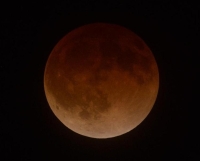
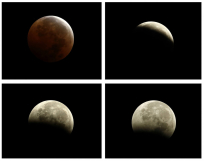
Because of the moon's proximity to Earth, a blood-red "supermoon" will be seen on Earth, an event that has caused fear across the world, with some interpreting the changing of the moon's colour as a sign of the apocalypse. The moon will turn into a deep, rusty red because of sunlight being scattered by the Earth's atmosphere.

During this rare celestial event, the moon will be near "perigee" or 226,000 miles away—its shortest distance from Earth. Due to this, the moon will appear 14 percent larger and 30 percent brighter than when it is at its furthermost point.

What makes this Sunday's celestial event even rarer is the fact that the moon will be approaching its closest distance to Earth while the Earth's shadow is covering the moon, resulting in a lunar eclipse. The last time such a spectacle was witnessed was in 1982.

The "blood moon" event was interpreted by some as a sign of doom, partly due to this verse from the Book of Revelations: "I watched as he opened the sixth seal. There was a great earthquake. The sun turned black like sackcloth made of goat hair, the whole moon turned blood red."

Some Mormons in Utah have even begun stocking up on food supplies and emergency kits, fearful that the blood moon will trigger the end of the world.

Mormon leaders, however, issued a statement earlier this week, telling its 15 million faithful not to worry about the blood moon event.

The leaders told their followers that they should "avoid being caught up in extreme efforts to anticipate events."


related articles
\'Blood moon\' this September could be  biblical sign of Apocalypse, pastors say
'Blood moon' this September could be biblical sign of Apocalypse, pastors say

Next month, anywhere from September 21 to 28, the Moon is expected to turn red, prompting two Christian preachers to warn that this could be the sign of Jesus Christ's second coming.

Blood moons and the end of the world: How not to interpret biblical prophecy

Interpreters like John Hagee and Mark Blitz link biblical prophecies, lunar eclipses and historical events. Mark Woods on whether they are right to do so.

'Blood moon' fears lead Mormons to prepare for disaster

Some residents of Utah in the US are stockpiling food and other essentials as this month's widely so-called "blood moon" approaches.

News
Faith in difficult times: lessons from 1930s Britain

Architectural historian Steven Brindle talks to Christian Today about the faith that shaped 1930s Britain, the churches that supported struggling communities and what lessons the decade might have for us today.

Campaign aims to mobilise 500,000 Christians for Christmas outreach

Shine Your Light is aiming to mobilise half a million Christians to share the gospel with five million people across the UK this Christmas, with more than 2,000 churches already signed up, organisers say.

The Church of England should repent for previous calls to ban 'conversion therapy'

The Church of England's uneasiness about the government's ‘conversion practices’ bill is a perfect lesson in the old adage, 'be careful what you wish for,' writes Dr Martin Davie.

Leaked Home Office report links 'Christian extremism' to traditionalist beliefs and immigration concerns

An internal Home Office report lists concerns about immigration, multiculturalism and changing social values among the characteristics associated with what it calls "Christian extremism", it has been reported.