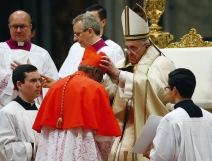
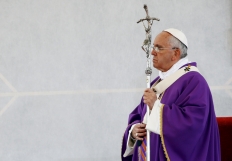
Pope Francis arrived in Sarajevo on Saturday bringing a call for lasting reconciliation 20 years after the Bosnian war.
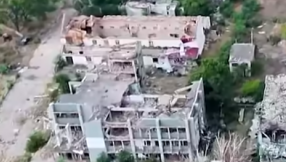
The one-day visit marks the third by a pope since Bosnia broke away from socialist Yugoslavia and descended into a war between 1992 and 1995 that killed 100,000 people.
Bosnia remains hamstrung by the legacy of the conflict, divided along ethnic and religious lines and trailing its ex-Yugoslav peers on the road to Western integration.
"Sarajevo is called the Jerusalem of the West," Francis told reporters on his plane. "It is a city of very different ethnic and religious cultures. It is even a city that has suffered much during its history. Now it is on a beautiful path of peace. I am making this trip to talk about this, as a sign of peace and a prayer for peace."
His arrival comes just days after the entry into force of a landmark EU agreement on closer ties with Bosnia, a first step towards possible membership.
The move is part of a new Western initiative to encourage political and economic change with EU money, and address frustrations over poverty, unemployment and corruption that fuelled unprecedented civil unrest in February last year.
Tens of thousands are expected to attend a Mass in Sarajevo's Kosevo stadium, 18 years after Pope John Paul II made his own call for "the courage of forgiveness" in the ruins of the city.
Catholics, the vast majority of them ethnic Croats, account for about 15 percent of Bosnia's 3.8 million people, hit like other communities by a wave of migration abroad during and since the war.
They share power with Muslim Bosniaks and Orthodox Serbs in an unwieldy system of ethnic quotas laid down under a US-brokered peace deal in 1995 and plagued by nationalist politicking.
While Bosniaks would like a more centralized and stronger state, Serb leaders in their own autonomous region are growing bolder in their threats to secede. Croat nationalists, too, are calling for the creation of their own entity within Bosnia, arguing that their rights are under threat.
To clinch the EU deal, Bosnia's political leaders adopted a commitment to pursue economic reforms and Western integration, but huge hurdles remain.