
As the G8 Summit gets underway in Canada, international agency Oxfam warned that G8 aid promises due in 2010 have been missed by as much as $20 billion dollars – twice the gap admitted by world leaders.
Oxfam urged leaders of the G8 to deliver on their promises to poor people and invest in their future.
Five years ago, leaders gathered at the G8 Summit in Gleneagles, Scotland responded to growing public pressure to fight poverty and pledged to increase overseas aid by $50 billion by 2010, with $25 billion of this going to Africa. But five years on, Oxfam say they have come up $20 billion short.
“When you write a cheque that bounces, you have to cover it somehow,” said Mark Fried, Oxfam’s spokesperson at the G8 Summit. “We urge the G8 to announce an emergency plan to provide the missing $20 billion by 2012.”
Oxfam also decried the G8’s attempt in their own accountability report to minimise their breach of faith by using 2009 dollars instead of 2004 dollars for the calculation and deducting for lower growth, thus showing only a $10 billion shortfall.
“Behind each dollar they fail to provide lies a child without schooling, a patient without medicine, a woman dying in childbirth for lack of care,” said Fried. “Empty promises don’t make nutritious meals, buy school books or life-saving medicines.”
The additional aid that has been delivered - an increase of $28 billion according to the OECD - has saved lives and has resulted in some breathtaking successes across the developing world.
“It seems to be fashionable to question whether aid really does improve the lives of poor people, but this could not be farther from the truth,” said Bill Nighy, actor and Oxfam Global ambassador.
"Every hour around the world 40 women and girls die in pregnancy and childbirth, not because they are feckless, lazy or stupid, but because the nearest hospital is often 100 miles away or they cannot afford to pay for treatment. The G8 has a responsibility to live up to its promises and help these mothers-to-be and the one in seven children in Sub Saharan Africa who die before their fifth birthday."
Oxfam called on the G8 to look beyond their own economic struggles and set out how they will fulfill the promises to poor countries made in 2005. An emergency plan to deliver the full $50 billion by 2012, and a timetable of increases to reach 0.7% of national income by 2015 is now due.
And Oxfam insisted aid pledges be new money, not "money shuffled within shrinking aid budgets, forcing the poor choose between food on the table and health care".
Oxfam also called on the G8 to ensure last year’s commitment to provide $22 billion in aid for agriculture comes as new money. The agency warned that currently at most $6 billion of this pledge is additional.
“Rich countries bailed out their banks but no one is bailing out the poorest people,” said Fried. “The $20 billion owed to poor men and women is just 0.07% of the gross national income of G8 countries, yet is enough to put every child in school or stop millions of children dying of malaria.”
-

Are we seeing the end of Western civilisation?
-

The dire American political situation: a brief overview for faithful Christians in Britain
-
Police appeal for witnesses after head smashed off Jesus statue at church war memorial
-

Poll shows support for conversion therapy ban disappears once people learn its implications
News
-

Former Crowded House pastor and wife charged with rape
-

Enoch Burke accuses Archbishop of remaining 'silent' in school trans dispute
-

'Such a blessing' - church that closed down 15 years ago opens its doors again
-

The dire American political situation: a brief overview for faithful Christians in Britain
-
Police appeal for witnesses after head smashed off Jesus statue at church war memorial
-

Half of Christian questions on ChatGPT are attempts to understand the Bible
Most Popular
News

AI and the Gospel: navigating faith and evangelism in the digital age
As AI changes the way people search for answers, build relationships and explore faith, churches are facing new questions about how to engage with technology without losing the human connection at the heart of the Gospel. Christian Vision’s Heinz Oldewage shares his thoughts.

The three-way squeeze on Christian education
Churches, charitable societies and Christian families created schools because they understood education as the formation of the whole person under God. Now the state behaves as though every educational freedom exists by its permission. It does not.
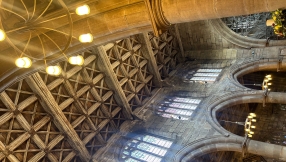
Historic Lancashire church awarded £614,000 towards restoration of Elizabethan ceiling
The money will go towards restoring its centuries-old Elizabethan ceiling and improve facilities for worshippers and the wider community.
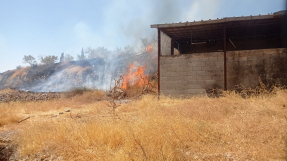
Settler attacks in Taybeh leading to exodus of Christians
Taybeh has lost 10 per cent of its population in three years.





