
New laws have come into force today aimed at preventing discrimination in a broad range of sectors including the workplace, education and services.
The Equality Act consolidates nine pieces of anti-discrimination legislation into one statute and covers areas like pay, gender, disability, and religion and belief.
The law permits some restriction in the provision of benefits by charities where it is “a proportionate means of achieving a legitimate aim”.
It makes pay discrimination harder as employers will not be able to use secrecy laws to stop male and female employees discussing their pay and employers will no longer be allowed to ask job applicants about their health at first interview.
The law also extends to discrimination against people who are perceived to have or are related to someone with a certain characteristic protected by the Act.
Neil Addison, Catholic barrister and director of the Thomas More Legal Centre, fears the law may create some difficulties for Christians.
In relation to the provision of services by charities, he said that the closure of Catholic adoption agencies showed that the concept of “proportionate” discrimination was “dangerously subjective” and that religious charities may end up having to choose between closure or acting against their will.
With the law making marriage and civil partnership a “protected characteristic”, Mr Addison said religious organisations that do not regard marriage and civil partnership as equal may face “additional pressures”.
The Government is still consulting on one section of the law to allow civil partnerships to be held on religious premises.
He said that if this section were to come into force in the future, it may become unlawful for any religious premises to refuse to conduct civil partnerships.
Reviewing the Equality Act on his blog, he said: “In theory [the] new Act does not change the law but merely consolidates it into one statute. However we shall have to see what happens in practice.”
Other experts have voiced concern at the “amount of employment red tape” and the potential for a sharp rise in the number of employment tribunal cases.
The British Chambers of Commerce estimates that the Equality Act will cost businesses £189 million to implement.
Its director general, David Frost said: "If private sector businesses are to offset job losses in the public sector, the significant costs of employing people must be reduced. As austerity measures start to bite, companies need the flexibility and freedom to boost employment and drive our economic recovery.”




-

UN officials demand explanation for Iranian church seizure
-

Archbishop of Canterbury withdraws award given to Muslim cleric who praised Bin Laden
-

AI could become a ‘very dangerous master’, warns John Lennox
-

Calls for Church of England to be 'rooted in scripture' ahead of General Synod elections
-

Most practising Christians are evangelical, study finds
-
How the new General Synod could move beyond the present disagreement over same-sex relationships
Most Popular
related articles
Pope attacks UKâs equality legislation
Pope attacks UKâs equality legislation
Christian relationship counsellor loses appeal bid
Christian relationship counsellor loses appeal bid
Government opens consultation on âunnecessaryâ laws
Government opens consultation on âunnecessaryâ laws
Christian group opposes marriage equality for homosexuals
Christian group opposes marriage equality for homosexuals
Catholic adoption charity loses gay exemption bid
Catholic adoption charity loses gay exemption bid
News

People view religious education positively, study finds
The government is consulting on plans to add RE to the national curriculum.
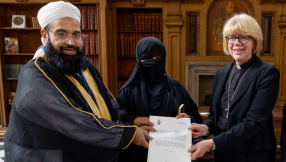
Archbishop of Canterbury withdraws award given to Muslim cleric who praised Bin Laden
Reform leader Nigel Farage said the decision to award Hafiz Muhammad Tahir Mehmood Ashrafi was "astonishing".
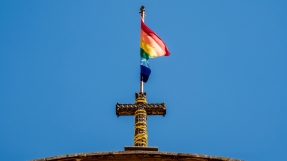
How the new General Synod could move beyond the present disagreement over same-sex relationships
How might the next Synod make progress in the next five years based on a recognition that there are those in the Church of England who hold fundamentally opposed positions on the matter? Is there a way of allowing both sides to achieve what they want? Martin Davie argues that the answer to this question is ‘Yes.’
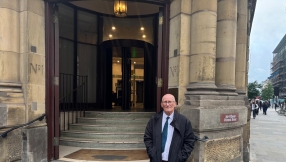
No part of London should become a free speech, gospel exclusion zone
Soho is not exempt from freedom of speech and Christian expression. And Christians do not lose their fundamental freedoms when they cross an invisible boundary into a neighbourhood associated with a different worldview. The streets of London belong to all of us, writes Andrea Williams.








