Fresh attempts to make assisted suicide legal have been met with disappointment by opponents.
Labour MP Kim Leadbeater's bill passed in the House of Commons last year but ran out of time in the House of Lords after facing intense scrutiny from peers.
Leadbeater's Terminally Ill Adults (End of Life) Bill would have made assisted suicide legally available for adults who had been given less than six months to live by doctors.
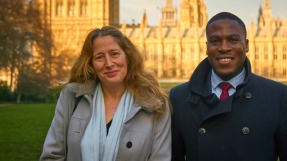
Now Lauren Edwards, Labour MP for Rochester and Strood, has spoken to the BBC about her plans to bring an identical bill to Leadbeater's using powers under the Parliament Act. These powers prevent peers from blocking identical legislation that has been passed by MPs in two consecutive parliamentary sessions.
Dr Gordon Macdonald, CEO of Care Not Killing, said that Leadbeater's bill was "deeply flawed" and that the decision to bring it back was "illogical and ideological".
He said it was "riddled with errors" and noted that "not a single doctors’ group or disabled group supported it".
“Trying to introduce an assisted dying law is a complex and technical matter that must not be rushed, because if it is, vulnerable people will pay the price with their lives," he said.
The Parliament Act has been used only seven times since 1911 to pass legislation without the consent of the House of Lords. The possibility of using it is contentious as it was originally designed to limit the ability of the Lords to indefinitely block measures approved by elected MPs. Critics argue that employing it on a matter raising profound moral and constitutional questions represents a significant departure from convention.
The Society for the Protection of Unborn Children (SPUC) accused "unscrupulous suicide activists" of seeking to bring back Leadbeater's bill "by such an underhand means".
SPUC chief executive John Deighan said, "The Leadbeater Bill only scraped through the Commons by a margin of 23 votes. Just 12 more MPs switching side would have brought us victory. If Leadbeater comes back, SPUC will fight tooth and nail for those 12 votes."
Disability groups have been strongly opposed to attempts to legalise assisted suicide.
On Saturday, the campaign group Not Dead Yet UK handed in a letter to Edwards' constituency office asking her to take forward a bill on improving palliative care instead.
“Palliative care in England is underfunded and unequal. Social care is in crisis," the letter reads.
“People are making end-of-life decisions under conditions of desperation, not genuine free choice.
“We would strongly encourage you to consider bringing a Private Member’s Bill on palliative care instead – it would help more people, more quickly, with far less risk.”
A recent poll of 10,000 people by Whitestone Insight for The Other Half group has found little appetite for resurrecting assisted suicide in Parliament, with a majority of respondents in every constituency - including in Edwards' - believing the House of Commons should not bypass the House of Lords to make assisted suicide law.
When presented with a list of political priorities, legalising assisted suicide came last for voters, with a majority across the country caring more about the NHS and end-of-life care.
Dr Macdonald said there was a "lack of democratic mandate" for Leadbeater's bill as Labour did not include legalising assisted suicide in its manifesto ahead of the last election.
"Indeed, only 34% percent of the electorate voted for Labour at the last election, so the Labour MP would be wrong to suggest that the Labour Government has a democratic mandate to support the bill being forced through by use of the Parliament Acts," he said.
Under current law in England and Wales, assisting another person’s suicide remains a criminal offence under the Suicide Act 1961, carrying a potential prison sentence. Prosecutions are very rare and since 2009, only a small number of cases have resulted in conviction, with the majority either not proceeding or being withdrawn after investigation.
The last serious attempt in the House of Commons to legalise assisted suicide was in 2015, which was decisively defeated. Since then, further proposals have been introduced in Parliament but none have progressed through both Houses to become law. Leadbeater's bill was the closest England and Wales has come to legalising assisted suicide.
Christian Reform MP Danny Kruger said it was "dismal news" that Leadbeater's bill is being brought back.
"We’re going to be offered the same bill that left the Commons (left with lots of ‘oh the Lords will clean up that glaring problem, don’t worry just pass it’) on a take-it-or-leave-it, unamendable basis," he said on X.
"Even if you accept the case for assisted dying this bill is terrible, far too expansive and full of holes to be filled in after it’s in statute … but the advocates know they’ll never have a such a ‘progressive’ Parliament for years, so it’s now or never.
"So they’re trying to push through a dangerous bill that they admitted needed significant improvement, because it’s their last chance. They must be stopped."