
A Muslim lawyer in Pakistan estimates that around 95 per cent of the prosecutions for insulting the Prophet Muhammad or the Koran have no basis.
The lawyer spoke to Aid to the Church in Need (ACN) but cannot be named for security reasons.
He echoed the claims of many aid groups who warn that the country's blasphemy laws are being misused to carry out personal vendettas.
He told ACN that the accused are mostly poor people who have "no status in society" and are unable to defend themselves.
Although he is a Muslim, the lawyer has taken on cases involving Christians and says he and his family have received threats from radicals for representing Christians, Muslims and other people accused of blasphemy.
Despite the risk to his life, he does not charge legal fees for blasphemy cases, instead saying that he sees it as his "duty to protect poor and innocent people from injustice”.
He added that it was his way of fulfilling his "promise to help defenceless people".
Human rights groups have long warned that Pakistan's blasphemy laws are being misused to harass and discriminate against Christians.
Christians make up only around 3 per cent of the population in the majority-Muslim country and often have no choice but to take up the lowliest and least paid forms of employment.
In addition to grinding poverty, Christians are frequently attacked, beaten, raped and killed for their faith, often within the context of a blasphemy allegation.
The lawyer told ACN that "massive workloads" meant that allegations of blasphemy are often not properly investigated by the police or the courts.
Pakistani law gives just 14 days for evidence to be compiled. If the evidence suggests guilt, then the accused is arrested and detained.
People accused of blasphemy face the terrifying prospect of radicals grouping together in their neighbourhood to attack them or their family. Family members often go into hiding, while the accused must take the stand in court alone. It is not uncommon for dozens of radicals to turn up inside the court to support the prosecution and intimidate the defence's witnesses.
One Christian woman, Asia Bibi, has been in prison for the last year after being sentenced to death for blasphemy. She is appealing the judgement.
ACN is among the organisations raising awareness of the plight of Christians in Pakistan.
In July, ACN UK Director Neville Kyrke-Smith was among those who submitted a petition at London’s 10 Downing Street calling for action to protect Christians and other minorities in Pakistan.
He said at the time: “We are at one with those who are persecuted in Pakistan and all those who suffer in connection with the blasphemy laws.
“Please help us to change these blasphemous blasphemy laws which lead to killings.
“We ask the government of David Cameron to ensure that religious rights are included in any and every discussion with other countries.”
-

Enoch Burke accuses Archbishop of remaining 'silent' in school trans dispute
-

Churches challenged to make single Christians feel fully part of church life
-

Many churches lack AI policies despite widespread support among pastors, study finds
-

Half of Christian questions on ChatGPT are attempts to understand the Bible
News
-

Former Crowded House pastor and wife charged with rape
-

Enoch Burke accuses Archbishop of remaining 'silent' in school trans dispute
-

'Such a blessing' - church that closed down 15 years ago opens its doors again
-

Christians urged to speak out against 'conversion practices' bill
-

Half of Christian questions on ChatGPT are attempts to understand the Bible
-

Violence and persecution driving global Christian exodus, report warns
Most Popular
News

The dire American political situation: a brief overview for faithful Christians in Britain
Professor Robert AJ Gagnon argues that Christians have a moral duty to vote Republican, contending that Democratic policies pose a greater threat than Republican candidates’ failings.
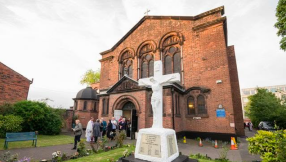
Police appeal for witnesses after head smashed off Jesus statue at church war memorial
Officers have released a CCTV image after a war memorial at St Alban’s Church in Warrington was vandalised and daubed with offensive graffiti.

Belief in ghosts and magic linked to faith and trust in science, study finds
A new study suggests that Americans who believe in God while placing strong trust in science and reason may be more likely to believe in ghosts, curses and other supernatural phenomena.
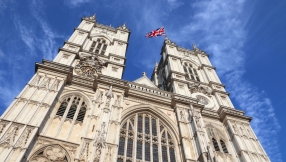
Archaeologists may have discovered identity of mystery skeleton in Westminster Abbey
Archaeologists believe they may have finally discovered the identity of a skeleton buried in a Roman sarcophagus in Westminster Abbey.





