Loneliness and isolation are the most widespread social problems affecting English communities, regardless of income or social class, according to a survey of nearly 2,000 clergy.
The online study of social action by Anglican churches found that social isolation was described as a major or significant problem by nearly two-thirds of Church of England clergy.
It was the only issue to be cited as a significant problem in wealthy as well as deprived communities and was more common than unemployment, homelessness and poor housing.
The survey of nearly 2,000 clergy carried out by the Church Urban Fund and the Church of England also found the number of churches involved in running food banks over the last three years had doubled from a third in 2011 to two-thirds in 2014.
Paul Hackwood, executive chair of Church Urban Fund, said: "We see through our work all around this country the damage that loneliness and isolation brings to people's lives.
"It is fantastic to see the difference that churches are making in local communities, re-building hope and growing meaningful relationships."
Tim Thornton, the Bishop of Truro, said the report showed that social action was deeply embedded into the mission of the Church of England.
"It is heartening to see the Church responding so impressively to a range of different needs, including social isolation and loneliness.
"We live in an increasingly individualistic and atomised society. Through fostering social networks, friendships and family life, churches help to provide the 'glue' that binds people together and help build stronger communities."
The report says social action is not an optional side project for the Church but is core to its heart and mission.
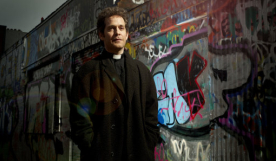
As an example the report cites Father Andrew, vicar of St James' and St Mary's in Kilburn, who found out on Twitter that the local post office was going to close.
He knew that this was the opportunity he had been waiting for to do something that would help to put the church back at the heart of the community.
Over the following two years he negotiated for a post office to be established in his church building. The church has also opened a café, stationery shop, florist and a soft play area for young children.
He said: "We thought carefully about how we could drive footfall into the church building. We spoke to people and researched what else was going on in the area. We wanted to make sure that we could offer things that would help to bring new people through the door. A lot of people feel awkward about coming into church and so we wanted to create a space that would be welcoming and fun, to bridge the gap that often exists between churches and communities."
The facilities opened in July 2014.
"It's beginning to change us," said Father Andrew. "It's making us think about how we can be as a worshipping community in this newly renovated building. We want to retain our identity, but also to reflect our new relationship with our community. Before we made these changes, people just used to come to us for church services, so we were in control, now we have to be open to the people who come through the door for other reasons.
"I would recommend this to anybody: find something that meets a community need, then bring it into the church. It will bring in new people and it will also force your church community to respond to people who are coming to the church and just being themselves. This is a completely different and life-giving experience."