Three Baptist priests were beaten and held hostage in Guinea after villagers accused them of spreading Ebola.
According to the BBC, the priests were visiting the village of Kabac in Forecariah in order to treat wells and latrines with insecticide. However, locals believed them to be spreading the Ebola virus, and attacked the clergymen.
Their vehicles were set alight, and the men were taken captive. Police arrived at the scene and arrested some locals, but not before the town council building was also attacked and set on fire.
It's the second incident of this kind to take place in Forecariah this year. Earlier this month, two police officers suspected of bringing Ebola into the area were attacked and killed.
Guinea this week reopened its schools after closing five months ago to prevent the spread of Ebola. The latest figures released by the World Health Organisation (WHO) put the death toll at over 8,600 in West Africa, with 1,876 of those in Guinea.
A WHO report released last week explained that "community resistance" is persisting in the countries worst affected by the virus – Guinea, Sierra Leone and Liberia – and is proving to be a "major barrier to control".
Mobs have attacked treatment facilities and doctors, believing them to be introducing Ebola rather than helping patients. "Fear spread faster than the virus," in Guinea in particular, the report said.
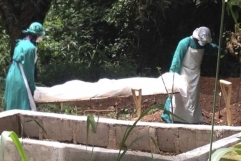
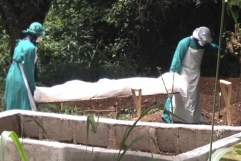
An incident on 23 September 2014 saw two Red Cross volunteers who had safely buried a body in Forecariah attacked by an armed mob. Angry residents then dug up the grave and removed the corpse from its body bag, hiding it in the village.
The mob then grew in size to more than 3,000 armed youths. They targeted a WHO-led team of epidemiologists, who were forced to flee, undoing "weeks of persistent and effective efforts to slow the outbreak".
The town had at the time a fatality rate among Ebola patients of 80 per cent.
"Traditional belief systems that attribute adverse events, including diseases, to non-medical causes having magical or mystical dimensions, such as a curse or a payback for past sins, have been important factors in some areas," the report said.
Experts reported last year that traditional healers and witchdoctors in West Africa were contributing to the spread of the deadly virus. Wanting to cash in on the epidemic, a number of people claiming to be able to heal Ebola through witchcraft were encouraging locals to eschew Western medicine in favour of their own costly techniques.
Cases of people flocking to see these so-called healers resulted in the disease spreading further, as the witchdoctors themselves often contract Ebola, which is spread through contact with the bodily fluids of an infected person.