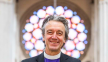
Judging by my social media and news feed, not everyone is enthusiastic about the choice of Sarah Mullally as the new Archbishop of Canterbury. Or maybe – outside church circles – even cares.
But personally, a couple of weeks on from the announcement made in the grandeur of Canterbury Cathedral, I’ve made a decision to be optimistic.
Critics have pointed out that the first female archbishop will not be welcomed by those churches – in this country and overseas – who cannot accept women as priests, let alone bishops or archbishops.
Others have drawn attention to safeguarding problems in her current diocese of London and these concerns have to be taken seriously. Some have questioned her age, at 63, and that she will have to retire in just seven years. Others disagree strongly with her on a range of social issues, including her support for same-sex blessings.
I’m choosing to be hopeful for at least five reasons.
Firstly, Sarah Mullally spent more than 35 years working in the NHS and has a ‘real world’ perspective on our society. Nurses often see people at their lowest point and are trained to bring compassion and care. She understands the pressures faced by frontline health workers.
Secondly, she rose to the top of her profession, becoming the youngest-ever chief nursing officer for England. In that role, she had to negotiate the corridors of power in Whitehall and Westminster, and grew used to working with, and challenging, politicians and civil servants.
Thirdly, she volunteered as a priest in a church for several years, combining an unpaid role with her paid profession. Since most of the workforce of the CofE is unpaid, this gives her a particular empathy with most of the Church.
Fourthly, Mullally has worked in a range of places: rural, urban, in a cathedral, in a local parish church, and as a bishop in Devon and London. She has experience of all kinds of people and places.
Fifthly, she’s a woman taking up a pioneering role at the head of a major British institution. In my experience, it’s still true that women have to be much better than male candidates to be chosen for these key roles. She has spoken of the discrimination against women that sadly still exists within the CofE and has lived with the reality of having consistently to perform at a high level.
And yet … in many ways, it doesn’t matter that much to local Church of England churches who the Archbishop of Canterbury is. Our role is simply to get on with the job of sharing God’s love – in action and in words – in our community.
We seek to serve local people with activities ranging from food banks to debt counselling, from old people’s clubs to toddler groups, from youth clubs to litter picks.
All in addition to our key role of seeking to follow the life and teachings of Jesus Christ, providing regular worship services, and holding funerals, weddings and christenings for the people in our parishes.
Lambeth Palace, the Archbishop’s London home, may be just 26 miles from St Albans, where I minister, but many of its preoccupations can seem a long way from the issues facing churches in my city and around the country.
There’s a prayer in the old Book of Common Prayer that asks that we may be “godly and quietly governed.”
That sums up my expectations for the new archbishop: that the emphasis of all that she does may be directed to supporting the grassroots of the Church of England and our mission in communities – urban, suburban and rural – across the country.
I pray that, under Sarah Mullally’s oversight, parish churches will flourish quietly in cities, towns and villages across England and beyond. Maybe, that will be the most important sign of her success.
Rev Peter Crumpler is a Church of England minister in St Albans, Herts, UK and a former communications director with the CofE.