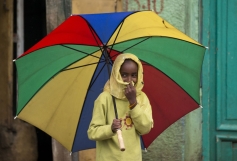
'Girls in UK Sunday schools are victims of FGM - the Church must take a stand'

Church leaders should do more to oppose female genital mutilation (FGM), anti-FGM charity 28 Too Many will tell those gathered at the Church of England's General Synod this weekend.

The charity's executive director, Ann-Marie Wilson, will challenge leaders at a fringe meeting at Synod to make a commitment to eradicating FGM both in the UK and abroad.

She told Christian Today: "It's not even just overseas, there are Sunday schools in the UK that have girls that have been cut or are at risk of being cut this summer."

It is estimated that 30 million girls in Africa are at risk of FGM in the next 10 years. A recent parliamentary report estimated that 66,000 girls aged 13 and under are also at risk in Britain.

The issue was last raised at Synod in 2002, when a motion was passed to condemn all forms of FGM. But the questions that need to be asked are what progress has been made since then? And has the official condemnation filtered down to individual churches around the UK?

Contrary to some expectations, 28 Too Many's research in Tanzania showed that FGM was more prevalent in Christian communities than among Muslims, which makes it particularly important for the Church to respond.

"I'm looking for some really key people to get behind his and say that it's not acceptable for the Church not to take a stand on this," Dr Wilson said.

"There's been action from Government, which has come from pressure from NGOs, but the Church needs to catch up."

On July 22, the UK Government is hosting the first Girl Summit, which will bring together international representatives, from the private sector, governments and faith groups, to commit to an end to FGM and child marriage.

Within the UK Church, Dr Wilson believes the should focus be on education at a local level, so that children's and youth ministry leaders are aware of the risks and might be able to identify vulnerable girls. It is also important for vulnerable women and girls to know where to get help.

To find out more visit the 28 Too Many website, or look at the advice available from the NSPCC. 

related articles
Christians Respond to Somalia Conflict

As Somalia's government struggles to regain control of the land from warlords and Islamic militants, a Christian group has decided to fund an emergency response in the highly insecure region in south-west Somalia.

UK must do more to end female genital mutilation

World Vision has released a new report to mark the International Day of Zero Tolerance on Female Genital Mutilation (FGM) on 6 February.

What do women have to say about their place in this world?

We speak to some inspirational Christian women to find out what they have to say about International Women's Day

News
Faith in difficult times: lessons from 1930s Britain

Architectural historian Steven Brindle talks to Christian Today about the faith that shaped 1930s Britain, the churches that supported struggling communities and what lessons the decade might have for us today.

Campaign aims to mobilise 500,000 Christians for Christmas outreach

Shine Your Light is aiming to mobilise half a million Christians to share the gospel with five million people across the UK this Christmas, with more than 2,000 churches already signed up, organisers say.

The Church of England should repent for previous calls to ban 'conversion therapy'

The Church of England's uneasiness about the government's ‘conversion practices’ bill is a perfect lesson in the old adage, 'be careful what you wish for,' writes Dr Martin Davie.

Leaked Home Office report links 'Christian extremism' to traditionalist beliefs and immigration concerns

An internal Home Office report lists concerns about immigration, multiculturalism and changing social values among the characteristics associated with what it calls "Christian extremism", it has been reported.