
The British Prime Minister, Tony Blair has been warned by one of his former advisors not to allow faith schools to become discriminative in the way they select pupils.
|PIC1|A director of government relations at Downing Street, Baroness Morgan has said that she feels “uneasy” about some of the ways that admissions are handled to single-religion schools. In particular, Morgan has expressed her worry that tolerance of other communities might not be taught well or encouraged within these types of schools, report The Guardian newspaper.
The comments have come following a new publication this week by the Young Foundation think-tank, addressing the relationship between white and immigrant communities in East London. The publication warned that in certain areas where there are church schools, social segregation has resulted.
The new book entitled ‘The New East End’ concluded that in East London, the Roman Catholic schools had become ‘White Citadels’, with many stories of parents baptising children into Catholicism to ensure they got into the right school.
Last week Tony Blair continued negotiations over the government’s Schools White Paper, as the British premier discussed the banning of interviews of prospective parents of students, which is a practice that still remains amongst many faith schools.
Baroness Morgan, however, did admit to the House of Lords that faith schools were clearly very popular with parents, indicating the clear advantages could be seen. However, Morgan also called for stronger measures to be put in place that surpassed Blair’s plans simply to end the interviewing of parents. This, Morgan urged, would be required to ensure that poorer families did not miss out on places at faith schools.
|TOP|Morgan explained that she gave her full-backing to the creation of more multi-faith schools that would admit children of all faiths under strong religious ethos.
The Church of England came under attack at the beginning of the year, and found itself having to defend against claims that its secondary schools select and exclude pupils on social grounds.
Church schools came under fire from critics over its admissions procedures as the Government continued to debate whether to create more faith schools and to give schools greater control over admissions.
Both the Church of England and the Roman Catholic Church, however, immediately hit back at calls from millionaire Sir Peter Lampl for faith schools to stop admitting pupils on grounds of religious belief, pointing to figures that revealed that their Church schools were in line with the national average intake of pupils from socially deprived backgrounds.
|AD|The Church of England has also released figures on the percentage of pupils in its schools who are eligible for free school meals (FSM) – an indicator of the social mix of a school - revealing that their numbers were similar to the national average.
Church of England spokesman Steve Jenkins responded, however, by saying that the Church took more than simply FSM indicators into consideration to assess social mix in schools.
“On measures of ‘eligibility for free school meals’ and the proportion of the school population in Church of England schools that are from postcodes with high Income Deprivation Affecting Children Index (IDACI) scores, there is virtual equality between Church of England schools and other types of school," he said.
He added: “There are also almost identical proportions of learners with statements of special educational needs (SEN) in Church of England schools compared with all other comprehensive and non-selective schools.”
Canon Hall said: “We believe the schools are serving the communities in which they are set and, we have deliberately tried to expand our secondary provision in areas of economic and social deprivation.”
According to Canon Hall, around 30 – or two thirds - of the schools that have been opened since the Dearing Report identified the need for 100 new secondary schools are sited in areas of high deprivation.
He said: “The Church of England is strongly committed to improving its provision in socially deprived areas. In practice, we are taking action to that effect. Our schools are distinctively Christian and open and inclusive to all who seek such education.”
Tony Blair’s Education Bill continues to be debated by politicians in the UK despite a number of compromises already sought by Blair.



-

The dire American political situation: a brief overview for faithful Christians in Britain
-

Conversion therapy ban supporters want prayer to be criminalised - this must not be allowed
-
Why the US election results do not bode well for America
-

Trump’s midterm defeat and its implications for Christians on both sides of the Atlantic
-
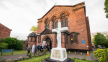
Police appeal for witnesses after head smashed off Jesus statue at church war memorial
-

Are we seeing the end of Western civilisation?
Most Popular
related articles
Church of England Schools set for Reforms Under Government Plans
A large increase in Church of England secondary school provisions looks set to take place after the government released its latest proposals in the Schools White Paper...
Church Primary Schools Come Out On Top in League Tables
According to the latest league table figures released by the Department for Education, church primary schools make up the highest proportion of those in the top 200...
Government’s Trust School White Paper Receives Increased Opposition
The government’s proposals to introduce ‘Trust Schools’ has come under more intense scrutiny this week, and the number of those with deep concerns over such institutions seems to be increasing...
Church Denies its Schools are Socially Exclusive
The Church of England has been fighting off criticism this week that it excludes pupils on the grounds of social eligibility...
News
Is religion making a comeback among young Americans? Study urges caution
New research from Pew Research Center suggests that while there are encouraging signs of religious engagement among younger adults, the evidence of a broader resurgence remains inconclusive.
Calls for inquiry into Queensland assisted suicide system
Despite the rise in deaths, the watering down of safeguards has been proposed.
Justin Welby says government reparations for slavery a ‘moral evil’
Welby was supportive of Project Spire during his time as Archbishop of Canterbury.
South Sudanese churches work for peace as tensions mount
South Sudan is the world's youngest sovereign nation.





