
Noting that poverty is low on the summit's agenda, religious leaders said it was their responsibility to pressure leaders to address the “moral crisis”.
“As religious persons, we come at this with a conviction that at the core of human existence the creator of all has will that all should share in the bounty of his creation,” said Dr William J Shaw, former president of the National Baptist Convention USA.
“We are not in the summit, but we are trying to impact the agenda of the summit.”
More than 30 faith leaders from Protestant Christian, Catholic, Jewish, and Muslim traditions gathered for the G-20 Faith Leaders Summit this week. The summit was organised by Bread for the World, the Alliance to End Hunger, and other partners.
David Beckmann, president of Bread for the World, highlighted that hunger has sharply risen around the world over the past few years. And in Pittsburgh, he noted, official statistics show that 22 percent of the people in the city live below the poverty line.
“We come together to say to the world and to our political leaders especially that hungry and poor people are important,” said Beckmann, who previously worked at the World Bank for 15 years overseeing projects to reduce poverty.
Similarly, Galen Carey, the new director of government affairs for the National Association of Evangelicals, called on political leaders at the G20 Summit to agree on and implement “concrete” initiatives that address the needs of the poor and hungry.
Too often in the past, the evangelical representative noted, rhetoric had not been followed by action. Instead, world leaders would repackage existing activities and brand them as a new commitment, Carey said.
The world’s most powerful political leaders conclude the summit today. The top agenda at the summit is reforming the world economy.
US officials are expected to provide details on a new initiative to reduce hunger and poverty in the world during the summit, according to Bread for the World.
"When the one billion people who are hungry are able to eat, then we can celebrate economic recovery," commented Ruth Farrell, Presbyterian Hunger Programme coordinator, according to the Presbyterian News Service. "The good news is that our planet produces enough food. Is there the will to live differently so that everyone gets a fair share?"
The number of people going hungry every day is now over one billion – a historic high, according to the UN World Food Programme.
-

New pilgrimage route follows in the footsteps of the Manx Bible translators
-

Survey finds Gen Z most likely to identify as religious
-

Christian social worker returns to Court of Appeal in dispute over withdrawn job offer
-

Australia's anti-therapy laws harm the most vulnerable - Britain should not copy them
News
-

Edinburgh University ends divinity programmes as theology faces a changing future
-
What links Tommy Robinson, Andrew Tate and the CofE’s newest diocesan bishop?
-

Third of young people now turning to AI for friendship, research finds
-

Why the Archbishop of Canterbury’s award controversy matters
-

Catholicism in France has 'collapsed'
-

From Genesis to Revelation: The ambitious AI project turning the Bible into music
Most Popular
News

Why New Age spirituality isn’t neutral
The problem is not the recognition that there is more to life than what we can see; Christianity agrees that there is. The question is where we go looking for answers.
More than one in four US Protestant churchgoers believe some biblical truths become outdated
US Protestant churchgoers who hold evangelical beliefs are more likely than their non-evangelical counterparts to express confidence in the Bible and its continuing authority, according to new research from Lifeway Research.

Cost of living crisis is ‘busting family budgets and increasing social isolation for children’ - report
Rising living costs are forcing many UK parents to reduce activities for their children and, in some cases, use child benefits to cover household essentials, according to new research from Child Poverty Action Group (CPAG).
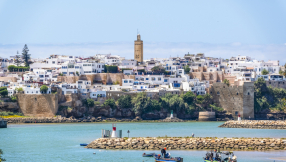
Religious freedom in Morocco is ‘substantively limited’, report warns
A new report has questioned Morocco’s claims to religious tolerance, arguing that laws relating to Ramadan observance, burial and conversion continue to limit freedom of religion despite constitutional protections.








