It was just supposed to be a bit of fun, another way to help people engage with my new book Paradoxology. But at the Keswick Convention this week it turned into something a lot more serious.
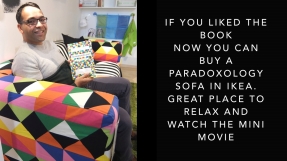
I had walked into IKEA one day and staring me in the face was a Klippan Sofa like no other. It had a bright multi-coloured pattern that looked uncannily like the cover of my book. The marketing people at Hodder, my publishers, agreed that it would be fun to buy the sofa for the conference season. I had some special cushions made with some nice commendations about the book from David Pytches, the founder of the New Wine Network, and also Bruce Milne who wrote the first systematic theology book I ever read, called 'Know the Truth.' Sofa so good.
I hired a car and drove the sofa up to Keswick and we have been using it in my seminar series looking at paradoxes in the Bible. For a bit of fun, I took the sofa on a tour of the sights of Keswick. Then we had a brainwave... how about we just take the sofa down to Keswick High Street and invite passers by to pitch the biggest question that they have for God. That is where things started to get more exciting.
We got a few good questions from people in Keswick for the convention: "Who made God?" "Can we trust the Bible?" "Why did God give us free will?" were some of the questions asked. It was good to chat about those questions as it is important that Christians take opportunities to think through the implications and challenges of their faith.
Then ordinary members of the public started to ask questions. Two ladies with four dogs between them asked, "Do Dogs Go To Heaven?" Another lady wanted to ask "If God loves us all why did He tell the Israelites to wipe out certain tribes?" That led to a five-minute conversation on the seminar I'd given earlier that day. But then another man on holiday with his son asked why he needed to be saved, which led to an in-depth conversation about what Jesus' death on the cross actually accomplished, an exchange of email addresses and a prayer in my heart that he follows up his interest and openness to the good news of Jesus.
Some said that the Paradoxology Sofa looks as if Elmer the multi-coloured Elephant - famous from children's books - had been killed and skinned and made into a sofa cover. But this silly sofa has actually modelled something good about the gospel. We are inviting people to sit down with us and have a conversation. We are not shouting at people with a megaphone, but we are recognising that it's ok to ask questions, we won't always have nice neat answers but we are willing to have a genuine conversation about faith.
Watch out for the Paradoxology sofa - it might well be coming to a street near you.
Krish Kandiah is author of Paradoxology: Why Christianity was never meant to be simple (Hodder Faith). He is executive director of churches in mission at the Evangelical Alliance and founder of Home for Good, a charity exploring how the church can make adoption and fostering a normal part of church life.
Keswick Convention's mission is to unite with Christians around the world to commit to three big priorities for our lives and churches – hearing God's Word, becoming like God's Son, and fulfilling God's mission.