
Church experts have warned this week that the future of television broadcasting in the UK may take place with a greatly weakening commitment to religious programming. The concerns have been aroused after the Office of Communications (Ofcom), the communications sector regulator since December 2003, announced that ITV would be allowed to dramatically reduce its religious programming by 50 percent. In addition to this, the Green Paper, which was released on 2nd March regarding the BBC’s charter renewal, also draws many concerns.
The Church of England newspaper has reported that Nigel Holmes, a member of the denomination’s Religion in Broadcasting group, believes that the confirmed cutbacks, along with a seemingly continued weakening commitment to religious broadcasting, could instigate a decline of specialist talent in religious programme-making.
He said, "You need specialists to make these programmes with care. The real risk now is that we’ll end up with generalists. Already we’ve seen a trend toward sensationalism, as with last year’s BBC programme on Noah which conclude that the ark wouldn’t float, or 2003’s documentary on St Paul in which the angle was that he was epileptic."
Prior to the release of Wednesday’s Green Paper, the Church of England’s head of broadcasting in the communications unit, Arun Kataria, added his weight behind the increasingly worrying area. He said, "The Church’s concerns about broadcasting are much wider (than just religious programming). We fully support the Public Service Broadcasting ethos that guarantees quality in broadcasting."
The Rt Rev Nigel McCulloch, who is the bishop of Manchester and the Church of England’s senior spokesman on communications, welcomed the DCMS (Department for Culture, Media and Sport) consultation on the review of the BBC charter. He said that "public service is a fundamental and immutable expectation of the BBC."
The BBC1 controller has recently been changed after the former controller, Lorraine Heggessey was accused of sacrificing the quality of the channel’s output in a bid to win the ratings war with ITV.
This has led to a revamp of the channel’s focus, and a promoted renewed commitment to quality programming. As part of this renewed commitment, the Church hopes that religious issues will be prominent and extend past purely religious programmes.
Kataria said, "If we are to see religious hours cut we will be looking to see an improvement in quality, and if religion is covered in other ways, to see that it is done in a considered fashion. We will be looking for a reflection of the fact that religion is an important part of people’s lives."
A response to the Green Paper is now anticipated, and the Religion in Broadcasting group will meet on Tuesday 8 March to discuss the issue.



-

The dire American political situation: a brief overview for faithful Christians in Britain
-

Conversion therapy ban supporters want prayer to be criminalised - this must not be allowed
-

Why the US election results do not bode well for America
-

Trump’s midterm defeat and its implications for Christians on both sides of the Atlantic
-
Are we seeing the end of Western civilisation?
-

Police appeal for witnesses after head smashed off Jesus statue at church war memorial
Most Popular
News
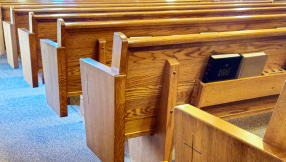
Is religion making a comeback among young Americans? Study urges caution
New research from Pew Research Center suggests that while there are encouraging signs of religious engagement among younger adults, the evidence of a broader resurgence remains inconclusive.

Calls for inquiry into Queensland assisted suicide system
Despite the rise in deaths, the watering down of safeguards has been proposed.
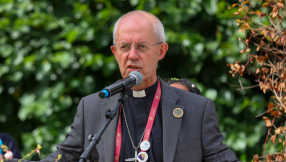
Justin Welby says government reparations for slavery a ‘moral evil’
Welby was supportive of Project Spire during his time as Archbishop of Canterbury.
South Sudanese churches work for peace as tensions mount
South Sudan is the world's youngest sovereign nation.





