
Ravalomanana, who was ousted in an army-backed coup in 2009, announced on Thursday that he would return to his home country on Saturday despite the government issuing a warrant for his arrest.
The former president said he was returning home “to help restore democracy” to Madagascar, which has been locked in a political and institutional crisis since current President Andry Rajoelina seized power.
Presidential elections are due to be held in the country in May and 36-year-old Rajoelina has indicated that he may run as a candidate after the minimum age for a president in the constitution was lowered from 40 to 35 last November.
The Rev Lala Rasendrahasina, President of the Church of Jesus Christ in Madagascar, said his Church was planning a service to pray for the safe return of Ravalomanana, who is also the Church’s Vice President.
Rev Rasendrahasina insisted that his opposition to Rajoelina was not down to Ravalomanana’s position in the Church but because the current regime was “not legitimate”.
“How can we support a person who made a coup?” he said. “I do not support this regime because the way he [Rajoelina] came into power is unlawful and unconstitutional.”
Rev Rasendrahasina equated Rajoelina’s regime to a “dictatorship”, and criticised the government for imprisoning political opponents, as well as its “harassment” of churches.
His said that his own Church’s radio station had been shut down by the authorities because it had broadcast a news item that was critical of the regime and that some of the Church’s property had been seized.
Rajoelina were to be re-elected, the Rev Rasendrahasina said the President would have to follow the democratic processes and “change his mind towards the Church”, as well as free political opponents and restore a free press.
“If he remains in power and nothing changes, that will be trouble for him because people will rise up against him. The people want democracy,” he said.
While the prospect of Ravalomanana’s return to Madagascar has prompted fears of a civil war, Rev Rasendrahasina said he did not think this was likely, although he admitted that there could be some violence.
He said: “I don’t expect civil war. We are not like in Africa. We are not Africans like that. Malagasies are peaceful people. Maybe violence could occur, but like in Cote D’Ivoire or Rwanda? No.”
Mediation by outsiders has so far failed to break the deadlock. SADC envoy Leonardo Simao recently presented a roadmap acknowledging Rajoelina as “interim president”, and calling for the formation of an interim national unity government and elections to take place this year. The proposal was rejected by Ravalomanana.
Rajoelina’s own proposal, that a transitional government be formed and elections held without international mediation, was rejected by opposition parties.
Rev Rasendrahasina welcomed a greater role for the international community in helping Madagascar transition to a democracy, but expressed his concern that self-interest would hinder their involvement.
“Each country in the international community has their own interest and would like to protect their interests. So the small countries just suffer.”
More than 70 per cent of Madagascar’s population lives on less than $1 a day and development has backtracked since the coup, which prompted international donors to pull all non-humanitarian aid. Two years on, Rajoelina’s government is still not recognised by the African Union and Southern African Development Community (SADC).
Rev Rasendrahasina said that whoever was elected President must not only listen to the people and restore freedoms, but also work to promote the economic development of the country.
He said the Church was already greatly involved in social action, and that it would continue to play an important role in the development of the country, particularly through its work to support the education of the people.
“I see a bright future for Madagascar, that it will rise up again from poverty under good leadership,” he said.
Despite the political uncertainty, Rev Rasendrahasina said he still felt democracy had a “good chance” in Madagascar.
He said: “This crisis has helped the people in Madagascar to know more about democracy, how valuable it is.”




-

Why the Archbishop of Canterbury’s award controversy matters
-

More than one in four US Protestant churchgoers believe some biblical truths become outdated
-

Christian leaders issue ‘sober and urgent call’ for Western Church to prepare for disruption
-

Australia's anti-therapy laws harm the most vulnerable - Britain should not copy them
-

Songs of Praise celebrates 65 years with special anniversary episode - and finds a new generation online
-

First segments of Eternal Wall of Answered Prayer near Birmingham completed
Most Popular
News
Disabled baby euthanized in the Netherlands
Doctors in the Netherlands euthanized a severely disabled one-year-old child, the first case reported by Dutch authorities under rules introduced in 2024 that allow ending the lives of seriously ill children between the ages of one and 12.

400% increase in euthanasia deaths in Australian state of Victoria
Right To Life UK said the surge in numbers showed why UK MPs were right to reject assisted suicide.
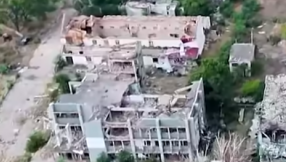
Ukrainian churches appeal for aid in starving Oleshky
Russia and Ukraine have blamed each other for the crisis in Oleshky.
Westminster Abbey plans memorial to JRR Tolkien
The memorial will go next to that of his friend CS Lewis.








