China is to publish online details of legal religious venues, the official Xinhua news agency reported on Saturday, apparently in an effort to "root out illegal religious activities".
Names and addresses for "all Buddhist and Taoist venues" would be published within two years, Wang Zuoan, director of the State Administration for Religious Affairs, told a conference on Friday, according to the news agency.
Xinhua made no mention of other religions but it quoted Wang as saying the information would help stop illegal religious activity in unauthorised locations.
Despite the rules, unsanctioned religious movements, which the authorities call cults, have proliferated in recent years, and the government has grown increasingly active in trying to discourage their growth.
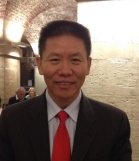
In October, Bob Fu, a Chinese pastor who was tortured and imprisoned for his faith and went on to found China Aid, told Christian Today that Christians were seeing the worst cultural persecution in China since the Cultural Revolution.
He said crackdowns on churches, including those sanctioned by the communist party, as evidence that the government is tightening its defences against the 'threat' of religion.
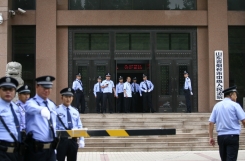
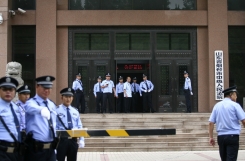
"There has been forced demolition, the removal of crosses, over 300 churches have been attacked and government sanctioned church pastors sentenced to 12 years in prison. Multiple believers have been attacked and hospitalised, and thousands of police were mobilised to attack a church. That has not been seen since the time of the Cultural Revolution. It's overwhelming."
In April 2014, the state-backed China Daily website reported that the Chinese government was planning to introduce its own brand of approved Christian theology.
"The construction of Chinese Christian theology should adapt to China's national condition and integrate with Chinese culture," Wang Zuoan said at the time.
Beijing also maintains a ban on the Falun Gong church, which has become one of the most strident public opponents of the Chinese Communist Party.
Anti-cult messages are prolific on message boards in some city neighbourhoods, and suspicion can extend to established religions.
The government is locked in a long-running dispute with the Vatican over who appoints Catholic bishops, and in recent months some officials have removed crosses from Christian churches and banned Christmas symbolism.
The government is even more suspicious of Islam, and has tried to discourage traditional Muslim practice in the Xinjiang autonomous region. It has also tried to suppress political activism among Tibetan Buddhists.
The government describes resistance to its rule in Muslim and Tibetan Buddhist communities as inspired by outside forces trying to dismember China, and defends its religious policy as suitable for "reasonable practitioners".
Additional reporting by Reuters