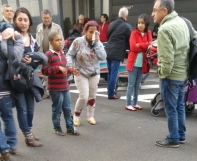
So, it's happening – the inevitable reaction to the Brussels attacks. The hashtag #StopIslam is trending. Katie Hopkins is blaming it on refugees, Telegraph columnist Allison Pearson is using the deaths as an argument for leaving the EU. While the wounds of the injured are still gaping and the sorrow of the bereaved is just beginning, the world rushes to judgment.
Only it doesn't, not quite. A good number of the #StopIslam tweets are from people appalled at the sentiment, not people supporting it.
And there's another Twitter hashtag trending, too: #PrayForTheWorld.
Yes, an event like this draws out the crazies, the haters and the plain thoughtless. But it also reveals the vast reservoirs of human sympathy within the hearts of ordinary people, and their instinctive sense that wickedness like this is exceptional rather than normal.
And it has not – repeat ad nauseam, not – happened because Islam is bad, violent or inherently cruel. It has happened because some Muslims have become corrupted by a false ideology and learned a terrible, nihilistic creed that values human life at less than nothing.
But this is the danger: that we judge the many by the actions of the few, and let our attitudes to the refugees trekking across Europe, the displaced people in miserable border camps, the hapless voyagers on overcrowded craft, be formed by actions of those whom these people would repudiate in horror.
The danger is that instead of seeing a friendless child or a desperate parent longing for a home and security, we see a potential terrorist. After all, they are Muslim; and perhaps their skin is a slightly different shade from our own.
I don't believe it. I believe the overwhelming majority of refugees, and the overwhelming majority of Muslims who already live in Europe, want the same as anyone: to live peacefully. I believe that's what should control our attitude to them. It's about respect for them as human beings, about recognising them as children of God, and about refusing to give in to fear of the unknown.
"Do not forget to show hospitality to strangers, for by so doing some people have shown hospitality to angels without knowing it," says Hebrews 13:2. Nowadays the angels may be disguised as Eritreans, Syrians or Iraqis. Their wings are folded under shabby jackets and their celestial radiance concealed under the grime of the road, but they are unquestionably among those beaten back at the Macedonian border or waiting in a squalid camp at Calais.
And let's face the other danger, too. We may entertain angels unawares, but we may also entertain demons. Of the millions on the move – yes, many of them Muslims – it only takes a dozen to bring a city to a halt and cause unimaginable suffering.
Anyone who has a heart grieves over what has happened, and fears for what lies ahead. Paris has been attacked, now Brussells. Where next? Berlin, Munich? London again?
How can they be stopped?
Donald Trump has an idea: a huge wall, all the way along the Mexican/US border. It's absurd, but its brutal simplicity has struck a chord. It won't work for America, and it wouldn't work for Europe. #StopIslam? Islam is already here. #StopRefugees? All of them? How do you plan to do that? Frauke Petry, leader of Germany's far-right AfD party, suggested shooting them. Really? Children too?
The truth is that those Joseph Conrad called the "terrible simplifiers" can be found on both sides. They are the terrorists who think the answer lies in a suicide bomb and they are the politicians and pundits who think it lies in a razor-wire fence. Democracy, decency and above all Christianity require a better answer. Yes, we should be hyper-vigilant. We should control our borders – and yes, there are legitimate questions about how that control can be exercised. We should find and root out violent radicalism.
But we shouldn't fall for the fantasy that if we closed the borders and created a Fortress Europe we'd solve the problem. It's harder than that. It means asking not what religion someone is, but why it has curdled in them and poisoned their minds. It means facing up to issues of justice, opportunity and integration – all the boring, routine work of government and civil society that makes no headlines and never trends on Twitter.
It means, above all, thinking as Christians, who recognise the infinite value of every individual and resist any attempt to demonize them – because God loves them, but also because it might turn them into demons.
Follow Mark Woods on Twitter: @RevMarkWoods