Britain launches first drone strike in Iraq against Islamic State

Britain launched its first drone strike in Iraq against Islamic State (IS) fighters at the weekend, the government said on Monday, saying a Hellfire missile had been fired at militants laying improvised explosive devices.

Britain's parliament approved air strikes against IS insurgents in Iraq in September and Royal Air Force Tornado GR4 fighter-bombers have since carried out dozens of combat missions as part of US-led military action in the country.

The Ministry of Defence said a Reaper drone had taken part in a series of coalition missions near Bayji, north of Baghdad, and had also provided intelligence to coalition aircraft to allow them to conduct further strikes.

Britain said last month it was authorising spy planes and armed drones to fly surveillance missions over Syria too, but that drones there would not be allowed to use their weapons for now. Britain hasn't carried out any air strikes in Syria either.

Islamic State swept through northern Iraq in June virtually unopposed by the Iraqi army and declared a caliphate in the parts of Iraq and Syria it controls.

The United States and its allies launched a barrage of attacks against Islamic State over the weekend, conducting 23 air strikes in Syria and 18 in Iraq against the militant group since Friday, US Central Command said.

(Reuters)

News
People view religious education positively, study finds

The government is consulting on plans to add RE to the national curriculum.

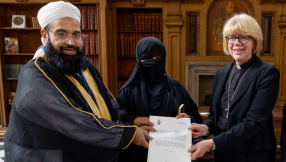
Archbishop of Canterbury withdraws award given to Muslim cleric who praised Bin Laden

Reform leader Nigel Farage said the decision to award Hafiz Muhammad Tahir Mehmood Ashrafi was "astonishing". 

How the new General Synod could move beyond the present disagreement over same-sex relationships

How might the next Synod make progress in the next five years based on a recognition that there are those in the Church of England who hold fundamentally opposed positions on the matter? Is there a way of allowing both sides to achieve what they want? Martin Davie argues that the answer to this question is ‘Yes.’

No part of London should become a free speech, gospel exclusion zone

Soho is not exempt from freedom of speech and Christian expression. And Christians do not lose their fundamental freedoms when they cross an invisible boundary into a neighbourhood associated with a different worldview. The streets of London belong to all of us, writes Andrea Williams.