The Archbishop of York regrets that David Cameron's Big Society campaign failed to gain momentum.
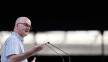
Dr John Sentamu expressed his disappointment in an address on democracy at the annual Civic Dinner of Sunderland Council last night.
In his address, the Archbishop suggested the Big Society could have helped to address what he sees as a "loss of vision" in the nation.
"Whatever people may say, 'The Big Society' was at least based on the idea of a cohesive society, in which people looked after one another and had a common vision," he said.
"The Church has been doing this for over two thousand years – so it is always good to hear others converting to this view.
"But now this concept of The Big Society appears to have vanished without trace."
While cynics saw it as a ploy to make community groups foot the bill of local government spending cuts, the Archbishop said he had hoped it was a genuine attempt to unite communities in a common cause.
"We do need some unifying method for deciding what our priorities are and what we want to achieve in and for our communities," he said.
"I am a big believer in community involvement and proper representation through the democratic process.
"We need accountable structures and citizens ready to serve their communities for the greater good – regardless of individual political beliefs. Civic mindedness should not be a thing of the past.
"This is more important than ever now that pressure on resources is so tight and there are such hard choices to be made regarding local budgets."
He said low turnout in elections was a symptom that participation in local level government "is not working as well as it should do" and that people "do not feel involved in the decision-making process in their local communities".
One of the reasons why local democracy has not been freed "from the shackles of central government", he claimed, is because issues like spending, cuts and taxation have not been addressed openly.
"It is only by facing them in the clear light of day and getting all those whom they affect to get involved, that we shall achieve a solution which is truly democratic and can be owned by local people."
The Archbishop said the Church was willing to play its part but cautioned that there needed to be a "level playing field" when it came to the voluntary sector or social enterprises providing services.
"Currently there is a built-in bias in the system towards contracting out to the private sector as opposed to the voluntary sector," he said.
"The implication of this is that organisations such as churches, who play such a key role in providing vision and cohesion for communities - and frankly, for picking up the pieces when other local solutions have failed - are unable to take a lead in providing these services in their local communities."
He called for greater honesty in local government, particularly when it comes to explaining difficult decisions, like spending cuts.
"We know from our own experience that when cuts of over £20m need to be made from local budgets that, inevitably and regrettably, either cuts need to be made from some services or taxes would need to increase – or a combination of these two things.
"The sad fact is that politicians, of whatever persuasion, will all too readily promise the earth in order to win favour in the short term."
The Archbishop pointed to the Fairness Commission, which he sponsored in York, as a good model for local level democracy.
The Commission was launched in July 2011 as an independent advisory body to the City of York Council on how to reduce inequality.
The Commission invited written submissions from groups and individuals, and held public meetings on a range of issues, like health, housing, crime and education.
"The Fairness Commission provided us with a way of getting people to discuss local priorities which could then inform decisions made in the Council Budget," he said.
He concluded: "Let's ensure people are valued for who they are, in our local communities, through the ways in which we engage them in the vital decisions which affect all our lives. We need to treat everyone as valued individuals, lovingly and fearfully created by God."