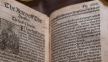
A small fragment of papyrus is providing valuable insights into the ordinary lives of the first Christians and the Roman Empire within which they lived.
The document, part of a collection of ancient manuscripts at the University of Basel in Switzerland, is a private family letter from Greco-Roman Egypt and has been dated to around 230AD - at least 40-50 years older than all other known Christian documentary letters worldwide, the university said.
It originates from the village of Theadelphia in central Egypt and belongs to the famous Heroninus archive, the largest papyrus archive from Roman times.
The letter was sent by Arrianus to his brother, Paulinus, and discusses day-to-day matters, from updates on the family to a simple request for some fish liver sauce.
"Greetings, my lord, my incomparable brother Paulus," the letter reads.
"I, Arrianus, salute you, praying that all is as well as possible in your life."
According to University of Basel researcher Prof Sabine Huebner, the brothers appear to have been young, educated sons of the local elite, as well as landowners and public officials.
Far from withdrawing from the world, the letter is evidence that Christians in the early third century were involved in civic life alongside their pagan neighbours.
Arrianus writes: "Now, I remind you about the gymnasiarchy, so that we are not troubled here.
"For Heracleides would be unable to take care of it: he has been named to the city council."
Importantly, the letter sheds light on their Christian faith, with Arrianus wishing his brother well "in the Lord".
"I pray that you fare well in the Lord," he writes.
Prof Huebner, who teaches Ancient History at the University of Basel, said the concluding greeting formula of the letter sets it apart from the "mass of preserved letters" from Greco-Roman Egypt.
"The use of this abbreviation – known as a nomen sacrum in this context – leaves no doubt about the Christian beliefs of the letter writer," said Prof Huebner, who writes about her findings in her new book Papyri and the Social World of the New Testament.
"It is an exclusively Christian formula that we are familiar with from New Testament manuscripts."
She said that the name of his brother, Paulus, was also revealing as it was an unusual name for the period.
"Paulus was an extremely rare name at that time and we may deduce that the parents mentioned in the letter were Christians and had named their son after the apostle as early as 200 AD," she said.