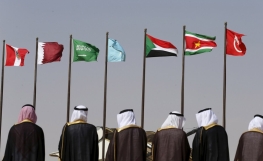
When Donald Trump's first overseas destination was announced, there were few eyebrows raised. Saudi Arabia, a longtime ally and trading partner of the United States was ready to welcome Trump and his delegation as it has several other Presidents including Nixon, Carter, Clinton, Bush Snr, Bush Jnr and Obama.
Why then has Trump decided to visit the Saudi Kingdom first? And what are the issues that he will be raising when he is there?
Generations of American leaders have recognized US reliance on Saudi oil as a key factor in the relationship, but in 2017, in an increasingly complex world, the relationship between America and Saudi Arabia is as important as ever.
Here we look at three factors which mean Trump is determined to get round a table in Riyadh.
1) Trade
Trump built much of his campaign on his claim he would create jobs and get America back to 'winning' again. Saudi Arabia is a major trading partner for the US.
US exports to Saudi Arabia totaled $25 billion in 2012, the last year for which full data are available. It was the 19<sup>th biggest market for American goods in the world. Put simply, this is a significant market which Trump will be looking to expand.
One of the main components of the trade between the two nations is weapons and military technology. Reuters recently reported that 'The United States has been the main supplier for most Saudi military needs, from F-15 fighter jets to command and control systems worth tens of billions of dollars in recent years.' It went on to explain that, 'Trump has vowed to stimulate the U.S. economy by boosting manufacturing jobs... The package includes American arms and maintenance, ships, air missile defense and maritime security, the official said. "We'll see a very substantial commitment ... In many ways it is intended to build capabilities for the threats they face."'
In spite of its deeply troubling human rights record, its lack of religious freedom for Christians and other minorities and its treatment of women, Trump's priority (in line with previous administrations) seems to be to sell the Saudis as many weapons as possible.
2) Middle East power struggle
The Saudis are major power-brokers in the Middle East. The most powerful and strategically placed Sunni power, Saudi Arabia has been threatened by the rise in influence of Shia Iran in recent years. The two countries dominate Middle Eastern politics and eye each other with deep suspicion born of decades of antagonism (and centuries of religious difference).
With the ongoing chaos in Syria, the long-standing conflict in Israel-Palestine and continuing instability in Egypt and other parts of the Middle East, Trump's team undoubtedly sees Saudi Arabia as a beacon of stability in the region.
In backing the Saudi (and Israeli) position of opposing President Obama's Iranian nuclear deal, Trump signalled to the Saudi government that he would continue to look after their interests in the region.
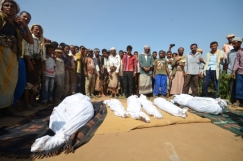
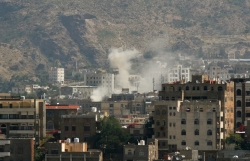
However, the Saudis themselves are involved in one of the biggest destabilising conflicts in the region. A Saudi-led coalition is currently inflicting massive damage on Yemen in an attempt to reinstate the control of the internationally recognised government there – by fighting the Shia Houthis. Both sides are accused of human rights abuses and the power struggle has provided a vacuum into which Al Qaida and other extremist elements have flooded. With Yemen on the brink of massive starvation problems, it remains to be seen if Trump will have anything to say on this huge issue.
3) Islam
Trump caused controversy when he called for shutdown of Muslims coming into the US from outside. Two attempts to enact a partial ban have been stymied by courts, but he has vowed to continue.
In the same way as Obama did when visiting Egypt not long after his election, Trump will use this trip to make clarifications about his position on Islam.
Some of his supporter base in the so-called 'alt-right' movement back home are reflexively Islamophobic. Trump may well see the visit to Saudi Arabia as an opportunity to spell out what his administration's position is. We're told to expect an 'inspiring but direct' speech about Islam.
Given the instability in the region and the strategic importance of the US relationship here (not to mention Trump's imminent visit to Israel) this speech could be a pivotal moment in his Presidency. The world watches on.
Follow Andy Walton on Twitter @waltonandy