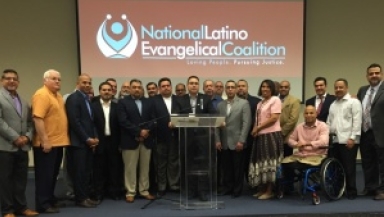
A leading coalition of Latin American evangelicals has become the first major group of its kind to come out in opposition to the death penalty in the US.
The National Latino Evangelical Coalition became the first National Association of Evangelicals congregations formally to join the fight for repeal after a unanimous vote by board of directors. The coalition urged its 3,000 member congregations to support efforts to end capital punishment across the country.
Coalition president, Rev Gabriel Salguero, said: "As Christ followers, we are called to work toward justice for all. And as Latinos, we know too well that justice is not always even-handed. The death penalty is plagued by racial and economic disparities and risks executing an innocent person. Human beings are fallible and there is no room for fallibility in matters of life and death."
The decision follows two years of talks between the coalition and Equal Justice USA. The coalition heard from wrongly convicted survivors such as Fernando Bermudez who spent 18 years in prison in New York for a murder he did not commit.
"After prayer, reflection, and dialog with anti-death penalty organisations like Equal Justice USA, we felt compelled to add our voice to this important issue," said Salguero.
Heather Beaudoin, who heads Equal Justice USA's evangelical outreach, said: "The faith community has been a critical force in the movement to repeal the death penalty. One exception has been the evangelical community, but that is changing along with the larger national trend away from the capital punishment. We have found a real eagerness among evangelicals to take another look at this issue. We are thrilled to formally welcome NaLEC into the death penalty abolition movement."
The National Association of Evangelicals, which represents millions of American evangelicals through 45,000 local churches from 40 different denominations, has since the early 1970s backed the use of capital punishment in cases involving premeditated murder as well as crimes such as hijacking and kidnapping where people are physically harmed.
The death penalty is legal in 32 states, with the most common method being lethal injection.
Churches opposed include The Episcopal Church, United Methodists, the National Council of Churches and American Baptist Churches. The Evangelical Lutheran Church in American has also expressed opposition. The Church of Jesus Christ of Latter-day Saints has no official position on the issue and considers the death penalty to be a matter of the state and civil law.