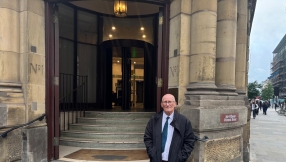
Iranian Pastor Yousef Nadarkhani, a convert from Islam to Christianity who is serving a six-year sentence for his Christian activities, was granted a temporary furlough from the notorious Evin prison and is required to return to prison on Monday.
Nadarkhani was released last Wednesday and spent the time at home with his family, Christian Solidarity Worldwide said.
Evin Prison is where many Christians and political opponents of the Iranian regime have been held, experiencing deplorable human rights abuses and lack of medical treatment.
CSW said it wasn't clear why Nadarkhani, who led a house church in the Gilan province, had been released.
"We urge the Iranian authorities to go one step further and release this innocent man, so that he can enjoy his freedom without fear of harassment or re-arrest," CSW's founder and President Mervyn Thomas said. "We also continue to call for the immediate and unconditional release of all those detained on account of their religion or belief or in relation to the defense of human rights."
Nadarkhani, who is from the Church of Iran denomination, was acquitted of apostasy in 2012 after being sentenced to death by hanging. He has been arrested and released on a number of occasions.
In May 2016, he was arrested along with three other members of the Church of Iran during a series of raids by security agents on Christian homes in Rasht. While all of the men were released on bail in 2017, they were re-arrested in a series of raids in July 2018.
During that raid, Iranian security forces beat him in front of his family and tasered one of his sons.
Iran Human Rights Monitor reported at the time that the pastor was taken to Branch 2 of the Revolutionary court of Rasht, northern Iran, after the raid.
"Plain cloth agents went to Mr. Nadarkhani's home and attempted to break down the door to enter the home. When Nadarkhani's son opened the door, the state forces threw him to the ground using an electric shocker. Then they beat Mr. Nadarkhani with the electric shocker and arrested him [in front of] his wife and child," said an unnamed source close to Nadarkhani's family.
Nadarkhani is serving a six-year sentence, reduced from 10 years, on charges of "acting against national security" by "promoting Zionist Christianity."
The U.N. Working Group on Arbitrary Detention has called his continued detention arbitrary.
In October 2019, Nadarkhani went on a three-week hunger strike to protest the regime's prohibition on his children's ability to complete their education because they refuse to study Islam.
The strike was to protest the regime's decision to withhold education certificates from his two sons, preventing them from moving on to the next grades because they would not study Islam or read the Quran in school.
The Islamic Republic is ranked as the ninth-worst country in the world when it comes to Christian persecution, according to Open Doors USA's World Watch List.
"Converts from Islam to Christianity are most at risk of persecution, especially by the government and to a lesser extent by society and their own families," it says.
"The government sees the growth of the church in Iran as an attempt by Western countries to undermine Islam and the Islamic regime of Iran. House groups made up of converts from Muslim backgrounds are often raided, and both their leaders and members have been arrested, prosecuted and given long prison sentences for "crimes against national security."