Government restrictions on religious beliefs remain at high levels around the world, but religion-related terrorism has declined, according to a new report from the Pew Research Center.
The report on religious restrictions covers 198 countries and territories spanning nearly all the world's population, and is based on data from 2019.
"The analysis shows that government restrictions involving religion, which in 2018 had reached the highest point since the start of the study, remained at a similar level in 2019," it reads.
Pew uses a 10-point government restrictions index and another for social hostilities to rate countries on their levels of restrictions.
One of the factors reducing the 2019 social hostilities index, which includes religion-related terrorist atrocities, from its 2014 peak was the Islamic State "losing control of a large swath of territory in Iraq and Syria", the report said.
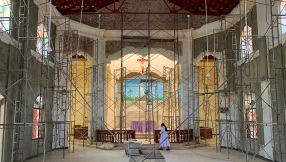
It noted that an exception to the decline in religion-related terrorism was the Islamist bombings in Sri Lanka on Easter Sunday 2019, killing more than 250 people and injuring 500 others at churches and hotels.
The report explained that government harassment tends to fall into two categories – harassment against religious groups and government interference in worship.
"More countries had at least one reported incident of government harassment or interference in worship in 2019 than in any other year since the study began in 2007," it said.
The study reveals a yearly increase in the number of countries where Christians are experiencing harassment. In 2007 there were 79 countries where Christians experienced government harassment. In 2019 that had risen to 128.
Likewise, in 2019, Pew found that across 163 countries, government authorities interfered directly in worship, up from 156 countries the previous year. The interference included prohibiting certain religious practices, withholding access to places of worship or denying permits for religious activities or buildings.
For the first time, Pew included a measure assessing governments' online religious restrictions.
"In total, 28 countries and territories (14% of all 198 in the study) had some type of online governmental restriction in 2019 that was related to religion. Most were in either the Asia-Pacific region (15 countries) or in the Middle East-North Africa region (10 countries)," the study found.
To track indicators of government restrictions and social hostilities, researchers drew on US governmental reports on international religious freedom, the United Nations, Council of Europe, British Foreign & Commonwealth Office and Amnesty International.