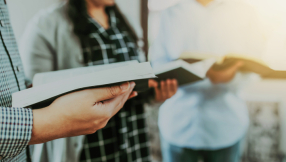
The Colombian Bible Society has unveiled the first complete translation of the Bible into an indigenous language - Wayuunaiki, which will serve two indigenous ethnic groups in Colombia. The Wayú ethnic community constitutes 20% of the indigenous population. The Nasa people, another native group, represent approximately 12.8%, according to data from the National Administrative Department of Statistics (DANE) in 2019.
"We work hand in hand with indigenous communities in Colombia with two main purposes: to preserve their native language and to speak the language of their heart through the Word of God. For this reason, together with the Wayú and Nasa communities, we are translating the Bible into Wayuunaiki and Nasa Yuwe, while strengthening ties with the population," the Colombian Bible Society says.
This marks the first time a complete Bible translation has been achieved in a native language within the country. The project required the expertise of biblical scholars, native translators, and language specialists to ensure that the meaning and interpretation of the sacred text remained intact. "Those of us who cannot read in Spanish found it difficult to complete the translation, but now, with this resource available in all our churches, we can advance not only in urban areas but also in rural communities," said Deinles Epieyú, a Wayú Christian leader, in an interview with Caracol News.
The translation, which took about 13 years to complete, is being celebrated as it will aid thousands of people who struggle with the Spanish language. The indigenous communities hope it will provide significant spiritual support and further enhance community relations.
"For us, the Bible translation signifies development and progress for the Wayú people. It advances both the linguistic development and grammar of our Wayuunaiki language as well as spiritual growth," said Ramón Uriana Epieyú, a member of the Wayú community.
Alexander Gómez, head of the Colombian Bible Society, said, "It is a great satisfaction because we know there will be transformations at personal, community, and socio-cultural levels. Each Wayú brother and sister who hears the Word of God in their native language will experience the love that God expresses to us."
During the presentation to the Wayú community, the organization distributed 1,600 Wayuunaiki Bibles free of charge. The goal is to provide at least 10,000 copies this year. The translation project cost 4.5 billion Colombian pesos (approximately 1.12 million US dollars) and was supported by donations from around the world.
The Wayú are indigenous people from the Guajira Peninsula on the Caribbean Sea, primarily residing in the northern part of Colombia's La Guajira department and the northern region of Venezuela's Zulia state.
While 97% of the Wayú population speaks their traditional language, Wayuunaiki, and 32% speak Spanish, 66% have not received formal education. Despite efforts to integrate the Spanish alphabet, the Wayú maintain a strong oral tradition and prioritize collective values over individual ones in their social interactions.
Originally published by Diario Cristiano, Christian Daily International's Spanish edition.