Anglican and Oriental Orthodox Churches have taken a major step towards reconciliation with a joint statement on the incarnation of Christ.
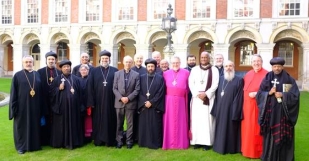
The Oriental Churches include the Coptic Orthodox Church of Alexandria, the Armenian Apostolic Orthodox Church and the Malankara Orthodox Syrian Church. The issue of how to describe the incarnation has divided them from the Eastern Orthodox and Roman Catholic Churches, and hence from the Protestant tradition, since the Council of Chalcedon in 451 AD.
At issue was how to express the belief that Christ was both human and divine in a theologically accurate way.
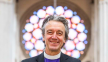
Now, however, the Anglican-Oriental Orthodox International Commission, co-chaired by Rt Rev Geoffrey Rowell and His Eminence Metropolitan Bishoy, has produced an "Agreed Statement on Christology" which brings the two sides together and means that each recognises the other as doctrinally orthodox.
The statement stresses that in Christ two natures, "distinguished in thought alone", "continue to exist without separation, without division, without change, and without confusion".
However, it says, "those among us who speak of two natures in Christ are justified in doing so since they do not thereby deny their inseparable indivisible union". It continues with a recognition of the "limit of language", saying: "We are unable to net and confine the mystery of God's utter self-giving in the incarnation of the divine Word in an effable, inexpressible and mysterious union of divinity and humanity, which we worship and adore."
In an acknowledgment of a central tenet of Orthodox thought, it says: "In accordance with this sense of the unconfused union, we confess the holy Virgin to be Theotokos" – a term meaning 'Mother of God' – "because God the Word became incarnate and was made man, and from the very conception united to himself that perfect humanity, without sin, which he took from her."
It refers to the 16th-century Anglican theologian Richard Hooker, whose Laws of Ecclesiastical Polity also express the oneness of Christ in two natures.
The statement flatly rejects charges that the Oriental Churches are "monophysite", believing that Christ is only divine: "The teaching of this family confesses not a single nature but One Incarnate united divine-human nature of the Word of God."