Suicide, post-traumatic stress disorder and debt are just some of the results of the "fundamentally flawed" Church of England Clergy Discipline Measure, a new report claims.
Moreover, no-one in the official Church hierarchy has a proper overview of what is happening, according to the investigation by the Sheldon Hub – part of a charity supporting those in Christian ministry. And Bishops are operating "irregular discipline" over clergy which is 'even less accountable', the report adds.
The Clergy Discipline Measure (CDM) was introduced in 2003 and is supposed to deal "efficiently and fairly with formal complaints of serious misconduct against members of the clergy" – according to the Church of England website.
However, the CDM has been subjected to scathing criticism – and even the Church's own explanatory diagram of the processes involved reveals a highly complex and confusing structure.
The report from the Sheldon Hub says: "We started two years ago with the assumption that the likely outcome of our project should be better training for those tasked with implementation of the existing CDM, plus some repairs to the Measure.
"The process so far has convinced us that the Measure is so fundamentally flawed that starting over from first principles and completely replacing the Measure is essential."
And shockingly, they declare: "Conversations we requested with key players such as the Clergy Discipline Commission president and members, ecclesiastical lawyers..., Bishops and Archdeacons led us to believe that no-one had a comprehensive overview."
The Sheldon investigation says that "some of the things that particularly concerned" it about the way the CDM is operating include:
- Clergy getting into significant debt through legal costs.
- Cases taking a very long time to resolve.
- Timescales in the Measure being disregarded.
- Significant mental health impacts on ministers.
- Clergy suicide.
- Long term effects on employment prospects in the church.
- Impacts on spouses and congregations – bringing the church into disrepute.
The damning report continues: "CDM operates largely in the dark. The only statistics that are gathered are a once yearly snapshot of case numbers and determinations published as the CDC [Clergy Discipline Commission] annual report. Nobody knows what happens to people during or after CDM because nobody has asked the question."
It goes on: "The CDM is increasingly being used for purposes for which it was never intended and clergy are structurally exposed to high risk of vexatious and unfounded complaints. There were people involved in the drafting of the 2003 Measure who had warned against exactly the problems we were seeing. They are a predictable consequence of badly framed legislation."
And it states: "CDM legislation contains no provision for scrutiny of process – if a bishop is mishandling a case the only possible redress is to appeal at tribunal against the determination', in other words the final result."
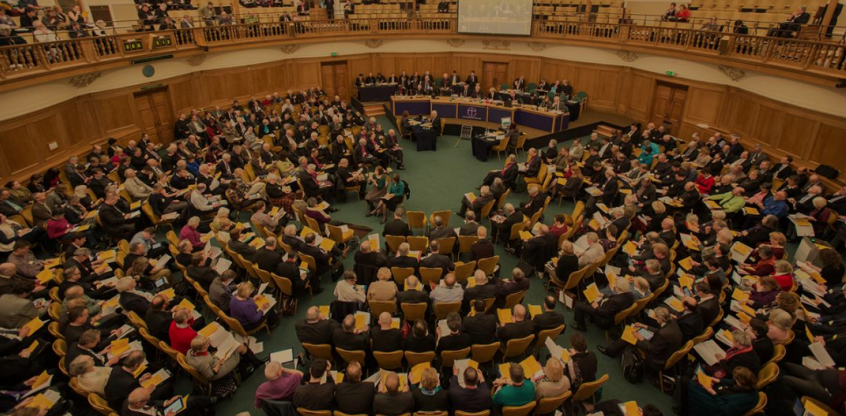
In 2017, the Archbishop of Canterbury, Justin Welby, told the Church's Parliament, the General Synod, that "CDM process has often contributed very, very badly indeed to their [clergy] well-being. The process has been the punishment, not the outcome".
The Bishop at Lambeth, Tim Thornton, is chairing a separate official Church of England working group looking into the CDM. This latest report is likely to feed into the working group's conclusions. At November's General Synod members were informed that its work was now "well under way".
Responding to the Sheldon Hub's findings, Bishop Thornton said: "The work done by Sheldon is very helpful and I am enormously grateful to them for enabling the voices of those who have been affected by the CDM process to be heard.
"It is clearly very worrying indeed to notice how much people have been and are affected by this and the CDM Working Group are being given access to the material being gathered by Sheldon in an appropriate way to help them in their work.
"All those who are suffering are entitled to receive proper and appropriate pastoral care and guidance."
David Baker is a former daily newspaper journalist now working as an Anglican minister in Sussex, England. Find him on Twitter @Baker_David_A