On the eve of flying to Cuba this morning, the Pope has criticised "tyrant" dictators who fail to "plant the seed" of leadership in others.
In a video recorded with CNN, Francis told Cuban and American students: "I will tell you one thing, a good leader is one who is capable of bringing up other leaders. If a leader wants to lead alone, he is a tyrant. True leadership is fruitful. Each one of you has the seed of leadership."
He continued: "The leaders of today will not be here tomorrow. If they do not plant the seed of leadership in others, they are worthless. They are dictators."
Pope Francis was answering questions in Spanish from the Vatican. Students in Havana and New York were invited to video conference with the Pope by the Scholas scheme, launched by the Pope in partnership with the United Nations Children's Fund to bring young people together via sports, art and technology.
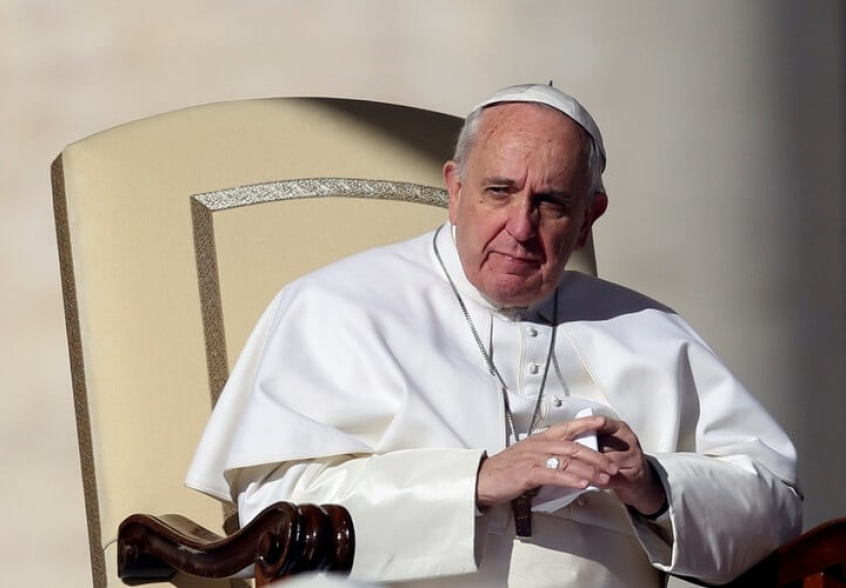
The Pope will spend three days in Cuba before flying to Washington. From there he will visit New York and Philadelphia.
As the first ever Pope from Latin America, in Cuba and the US he is expected to urge an end to the embargo which has been in place since the 1959 revolution. He has already been instrumental in helping to negotiate a renewal of diplomatic relations between the two countries which reopened embassies in Havana and Washington in July. Some travel and trade restrictions have also been eased. The UN disclosed this week that Castro is to address the UN General Assembly on what will be his first visit to the US as President of Cuba. Pope Francis will himself deliver the assembly's opening speech three days earlier.
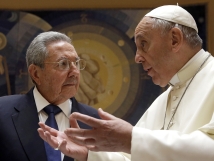
In Cuba, Pope Francis will celebrate Mass and preach at Revolution Square, meet Government officials including President Raúl Castro and, health permitting, former president Fidel Castro. He will also visit the Shrine of Our Lady of Charity del Cobre, the island's patron saint and celebrate Mass in Holguin and Santiago.
As many as six in ten Cubans are believed to be baptised Catholics. Religious activity has to be authorised by the state although Cuba ceased being officially atheist in 1992.