More than a third of US teachers have reported a rise of anti-Muslim or anti-immigrant sentiment in schools as a result of the US presidential election campaign.
This is one of the key findings from a report on the effect of the campaign on school children. On top of that, more than two-thirds of teachers say immigrant students have expressed fears about what might happen to them after the election.
The Trump Effect was compiled by The Southern Poverty Law Centre (SPLC), and says "this year's primary season is starkly different from any in recent memory".
SPLC President Richard Cohen said: "We're deeply concerned about the level of fear among minority children who feel threatened by both the incendiary campaign rhetoric and the bullying they're encountering in school.
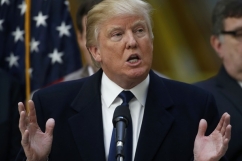
"We've seen Donald Trump behave like a 12-year-old, and now we're seeing 12-year-olds behave like Donald Trump."
The report also pointed to an increase in bullying of students whose race or religion have been discussed by candidates. It said it found the election campaign was producing "an alarming level of fear and anxiety among children of color and inflaming racial and ethnic tensions in the classroom."
One effect of this is that more than 40 per cent of teachers are now afraid to teach about the election.
"I try not to bring it up since it is so stressful for my students," said one teacher in Arlington, Virginia.
Teaching Tolerance director and author of the report, Maureen Costello, said: "Schools are finding that their anti-bullying work is being tested and, in many places, falling apart.
"Most teachers seem to feel they need to make a choice between teaching about the election or protecting their kids. In elementary school, half have decided to avoid it. In middle and high schools, we're seeing more who have decided, for the first time, not to be neutral."
One teacher in Indianapolis, Indiana added: "I am at a point where I'm going to take a stand even it costs me my position."
The data was compiled through an online survey conducted between March 23 and April 2 and reports on over 5,000 comments. Although candidates weren't individually named in the questionnaire, Trump was mentioned in over 1,000 comments.
"My students are terrified of Donald Trump," wrote a teacher from a middle school with a large population of African-American Muslims. "They think that if he's elected, all black people will get sent back to Africa."
Another teacher said: "The word 'Trump' is enough to derail a class."