In recent weeks, immense solar storms have affected the planet Earth. Some of them pushed the Aurora Borealis south, thereby lighting up North American skies. The Space Weather Prediction Center of the National Oceanic and Atmospheric Administration attributed the event to a CME or coronal mass ejection that sent massive waves of solar atmospheric materials toward the Earth.
"This event is expected to be weaker than the severe geomagnetic storm from earlier in the week," said a representative of the SWPC in an interview with CBS. The representative was referring to the third solar storm that hit the Earth from June 27 to 28.
The SWPC released an assessment last June 28 after the storm hit the planet. "A CME associated with the R2 (Moderate) Radio Blackout on 25 June glanced past the Earth early on 27 June, but did not cause geomagnetic storms as forecasters had predicted. The sunspot region that produced the event, NOAA AR 12371, is beginning to transit the west limb and forecasters are expecting low solar activity for the upcoming week," the assessment on the SWPC website said.
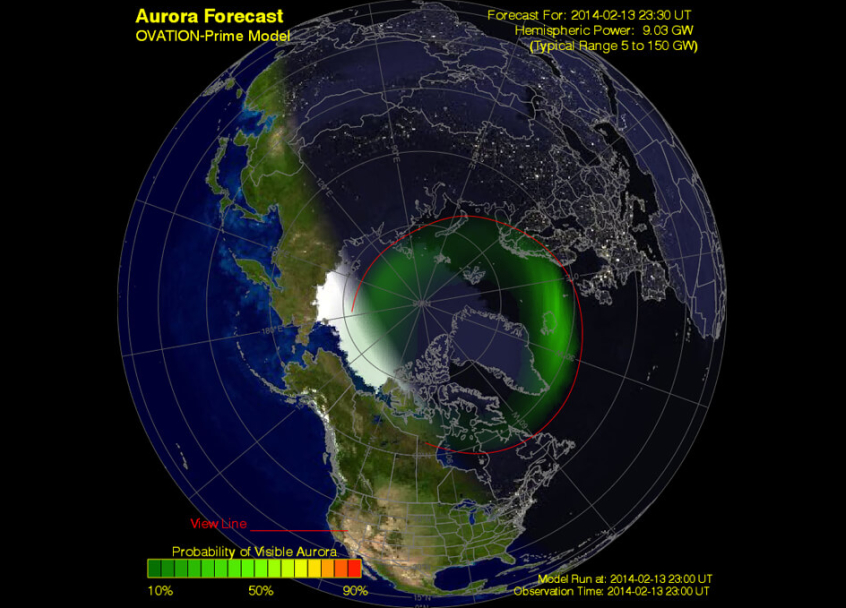
Earlier last June, two coronal mass ejections hit the Earth and caused the massive Aurora Borealis anomaly. The first took place last June 20 and the second, last June 22. Sightings of the Northern lights came in from Minnesota, South Dakota, West Virginia, Virginia, Wyoming and New Hampshire.
In a 2012 interview with Big Think, Michio Kaku, theoretical physicist best known for his involvement in the String Theory, explained how CMEs happen and how solar storms could gravely affect an electronic civilization, such as the one we have today. He said: "In 1859, at the famous Carrington event, some place fires got started because telegraph wires were overloaded."
"Society as we know it would be thrown back perhaps 100 years into the past," Kaku concluded after hypothesizing that if the same Carrington event happened today, satellites, power stations and all electronic devices would be wiped out.
Every 11 years, the North and South poles of the Sun flip and release a burst of energy called a sunspot cycle. Kaku likened the sunspot cycles to rifles which eject huge bursts of energy in the Earth's direction. Oftentimes, the Earth dodges these burst, but as the Carrington event suggests, the planet can suffer a direct hit.