
New Calvinism is sweeping through young Christians and to three theologians at least, that's good news.
It is a movement that has young believers going back to the roots of the faith – namely, to Scripture and the sovereignty of God.
"You've got a generation of Christians who've grown up in an overwhelmingly secular culture and they're not part of a churched culture," said Dr Albert Mohler, president of The Southern Baptist Theological Seminary, in an informal discussion hosted by The Gospel Coalition.
"They're realising that something has to explain how they came to faith in the Lord Jesus Christ. They have an absolute determination, you might say, to make clear that their first principle is the sovereignty of God, not the sovereignty of the self."
The Rev Kevin DeYoung, senior pastor of University Reformed Church in East Lansing, Michigan, believes part of the appeal of the New Calvinism is that it's "got some muscle to it" and is "robust doctrinally".
There is a renewed sense that "God's sovereignty is biblical and massively important, that God loves us before we loved Him, that He's the one who does the deciding work in our salvation", the young pastor said.
In recent years, pastors have pondered the upsurge of interest in Reformed theology – which includes holding to the authority of Scripture, the sovereignty of God, and the sovereignty of grace – with some proposing that it is coming out of a restlessness and dissatisfaction with contemporary evangelicalism.
"Weary of churches that seek to entertain rather than teach, longing after the true meat of the Word, these young people are pursuing doctrine and are fast becoming new Calvinists," states a post on the popular Christian blog Internet Monk.
Mohler has been identified as one of the evangelical theologians contributing to the resurgence. Others include Baptist theologian John Piper, C J Mahaney of Sovereign Grace churches, and Mark Driscoll of Mars Hill Church.
"What's new is you have new people in a new time who are rediscovering the same kind of theological instincts and impulses that led to the Reformation and finding them in the same sources – Scripture," Mohler explained.
And the desire for meaty answers to such questions as "how has God's grace come to me" emerges "from young people trying to swim against the tide of secularism", said the well-known evangelical.
Reformed theologian Ligon Duncan explained the phenomenon this way: "I think as the older confessional traditions jettison their fidelity to some of the great truths that all Protestants have valued because we found them in the Scriptures and see them at the very core of what Christian life and ministry is about, you've got a new generation of folks who are rummaging through our trashcans and saying 'this is great, why didn't somebody ever tell me about this?'"
As young people rediscover biblical truths, DeYoung believes it could "really reinvigorate evangelicalism".
Meanwhile, for Mohler, the label – whether it is the New Calvinism – does not matter.
It all comes down to the Scriptures and being "committed to the Gospel, wanting to see the nations rejoice in the name of Christ, and wanting to see Gospel-built and committed churches", Mohler indicated.
"If you're going to dive deeply into the Scriptures, if you're going to have to explain why the Scriptures have this authority ... [and] how this gets worked out in life, frankly, I don't care what you label it, you're going to end up in a good place."
Overall, the three theologians are excited.
"I think it is a wonderful and undiluted good thing that this younger generation is deeply biblical, deeply passionate, deeply convictional, increasingly confessional and ready to do something great for the name of the Lord Jesus Christ," Mohler said.



-

UN officials demand explanation for Iranian church seizure
-

AI could become a ‘very dangerous master’, warns John Lennox
-

Archbishop of Canterbury withdraws award given to Muslim cleric who praised Bin Laden
-

Calls for Church of England to be 'rooted in scripture' ahead of General Synod elections
-

Most practising Christians are evangelical, study finds
-
Church of England blessing same-sex relationships 'a bridge too far'
Most Popular
News

People view religious education positively, study finds
The government is consulting on plans to add RE to the national curriculum.
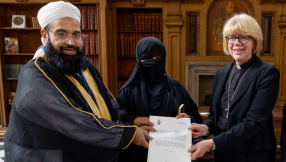
Archbishop of Canterbury withdraws award given to Muslim cleric who praised Bin Laden
Reform leader Nigel Farage said the decision to award Hafiz Muhammad Tahir Mehmood Ashrafi was "astonishing".
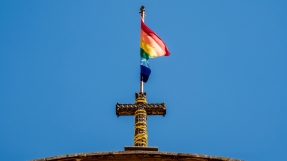
How the new General Synod could move beyond the present disagreement over same-sex relationships
How might the next Synod make progress in the next five years based on a recognition that there are those in the Church of England who hold fundamentally opposed positions on the matter? Is there a way of allowing both sides to achieve what they want? Martin Davie argues that the answer to this question is ‘Yes.’
No part of London should become a free speech, gospel exclusion zone
Soho is not exempt from freedom of speech and Christian expression. And Christians do not lose their fundamental freedoms when they cross an invisible boundary into a neighbourhood associated with a different worldview. The streets of London belong to all of us, writes Andrea Williams.








