
In Part 2 of his book on Jesus of Nazareth, Pope Benedict sets out to present “the figure and the message of Jesus”, offering us an indepth perspective on the passion narratives. the story of Holy Week.
His intention is to “develop a way of observing and listening to the Jesus of the Gospels that can … lead to personal encounter”.
Whilst His Holiness is clearly not setting out to write a book on Christian Jewish relations, it is inevitable that such a reflection on Holy Week should impact on them.
In 1965, a watershed moment, the groundbreaking decree, Nostra Aetate, was issued by the Second Vatican Council, in which the ancient charge of deicide was completely rejected:
“What happened in His Passion cannot be charged against all Jews without distinction, then alive, nor against all Jews of today…… Jews should not be presented as rejected by God or accursed, as if this followed from the Holy Scriptures … Christ underwent His passion and death freely, because of the sin of men and out of infinite love.”
In his close examination of the biblical texts of Holy Week, Pope Benedict takes our understanding and application of the Nostra Aetate text to a new level, offering original insights into the death of Jesus and the question of responsibility for it.
He goes out of his way, at every stage, to make it clear that it was not “the Jewish people as such” who called for Jesus’ death.
He examines in depth the words in Matthew’s Gospel which have had such a terrible impact on the Jewish people down the ages: “His blood be upon us and upon our children” and offers a completely new way of understanding these most difficult words, giving an explanation based on the Genesis text concerning the blood of Abel, as well as the accounts of the Last Supper. In doing this, his interpretation is wholly positive and no longer negative or damning.
All this is to be warmly welcomed and I hope very much that Pope Benedict’s personal and scholarly reflections on these texts which lie at the heart of the Christian message, may indeed make their own contribution to the growth of the new relationship between Christians and Jews which has been built up over the years since Vatican II.
In this, he is continuing the excellent work of his predecessors, Pope John XXIII, Pope Paul VI and Pope John Paul II in fostering dialogue with the Jewish people.
Sr Margaret Shepherd nds is Secretary to the Bishops’ Committee for Catholic Jewish Relations in the Catholic Bishops' Conference of England and Wales



-

Archbishop of Canterbury withdraws award given to Muslim cleric who praised Bin Laden
-

Calls for Church of England to be 'rooted in scripture' ahead of General Synod elections
-
How the new General Synod could move beyond the present disagreement over same-sex relationships
-

Most practising Christians are evangelical, study finds
-

No part of London should become a free speech, gospel exclusion zone
-
Church of England blessing same-sex relationships 'a bridge too far'
Most Popular
News
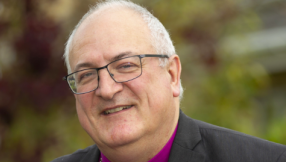
Bishop of Lincoln resigns after suspension over safeguarding complaint
The Rt Rev Stephen Conway will step down as Bishop of Lincoln on 1 October, seven months after being suspended from ministry.
What links Tommy Robinson, Andrew Tate and the CofE’s newest bishop?
It’s not every Church of England bishop that can claim connections to both Tommy Robinson and Andrew Tate. But Andrew Rumsey is an exception.
From Genesis to Revelation: The ambitious AI project turning the Bible into music
Micah Fiechter is the founder of the Music Bible, a project that has used AI to convert the entire Bible into music form across a range of genres. Christian Today spoke to Micah to find out more about what inspired him to start the project and the impact he hopes it will have.
Concerns for Pakistani teenage boy allegedly forced into Islam
Forced conversion is a problem in Pakistan.








